Lena Yang
Artist Domain
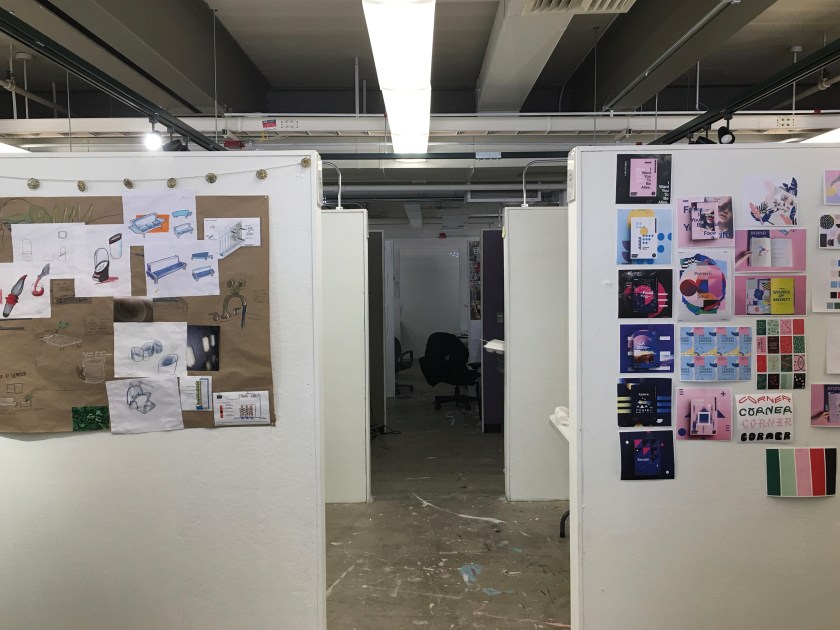
The senior art studios in the Art and Architecture Building lends itself to be an interesting example of domain. The whole area consists of rows and rows of cubicles facing each other. The spaces feel simultaneously private but also open. Every studio is identical, with 3 large empty, white walls, which students then decorate in an attempt to make it their own. Each cubicle is also marked with our name, on a small white piece of paper. This simple, and seemingly futile form of identification, takes the cubicle and makes it into one’s own private ‘studio’. I find comfort in my studio and retreat there to work, knowing that it is my space and not anyone else’s simply because it was marked for me by a professor. Just as Lavine says, domain can create a “sense of belonging” which is formed by the physical architectural forms, like the 3 walls of my studio, along with the cultural and social rules that manifest, such as the expectation of others to not encroach into studios that aren’t theirs.
The concept of domain as a physical and social means to keep things in or keep people out is further exemplified by the studios’ vulnerability. There is no camera or security system designed to protect our belongings which lay open on our tables. Anything from books, art supplies, food, blankets and furniture could be taken, yet it’s rarely the case that anything is reported stolen. There is a sense that all senior students are given their prospective spaces and will respect other spaces that are not their own.
 Brian's 212 Understanding Architecture Section