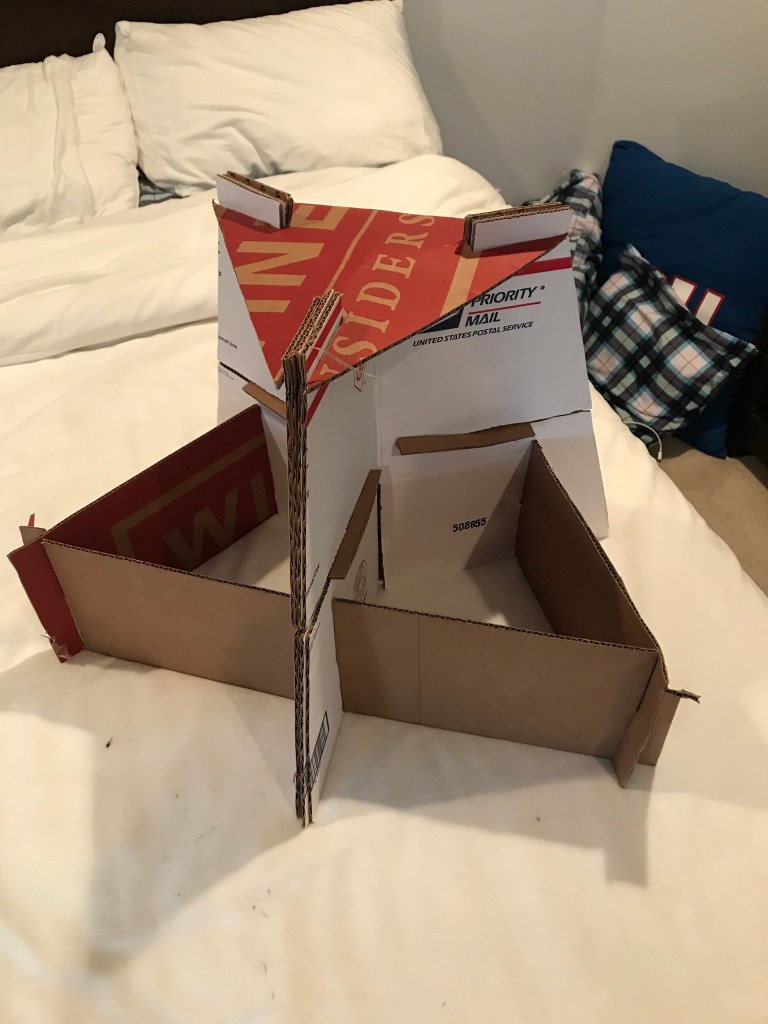
As of now, my stool is nearly complete. In order to construct the stool, I utilized a cardboard box along with three USPS boxes. With my stool, I wanted to focus my attention on strength, but center the majority of the stool’s structural capacity around a strong, basic geometry. Specifically, I wanted to create a simplistic design that would still resemble a typical stool. By doing so, the tectonics of my stool are quite visible to the viewer. In the conception process, I initially drew a design utilizing four legs with the same shape seen in the current iteration. After designing the pieces, I found that with the amount of cardboard I had that three reenforced legs would serve to bear the weight better than four singular segments of cardboard. Once I made this change, my design consisted of strictly the center triangular structure, with small pieces of cardboard slotted onto each of the three legs in order to keep the pieces together. The three legs were reenforced by multiple layers of cardboard and designed thicker towards the bottom to improve strength, but ultimately this was not enough to bear the necessary weight.
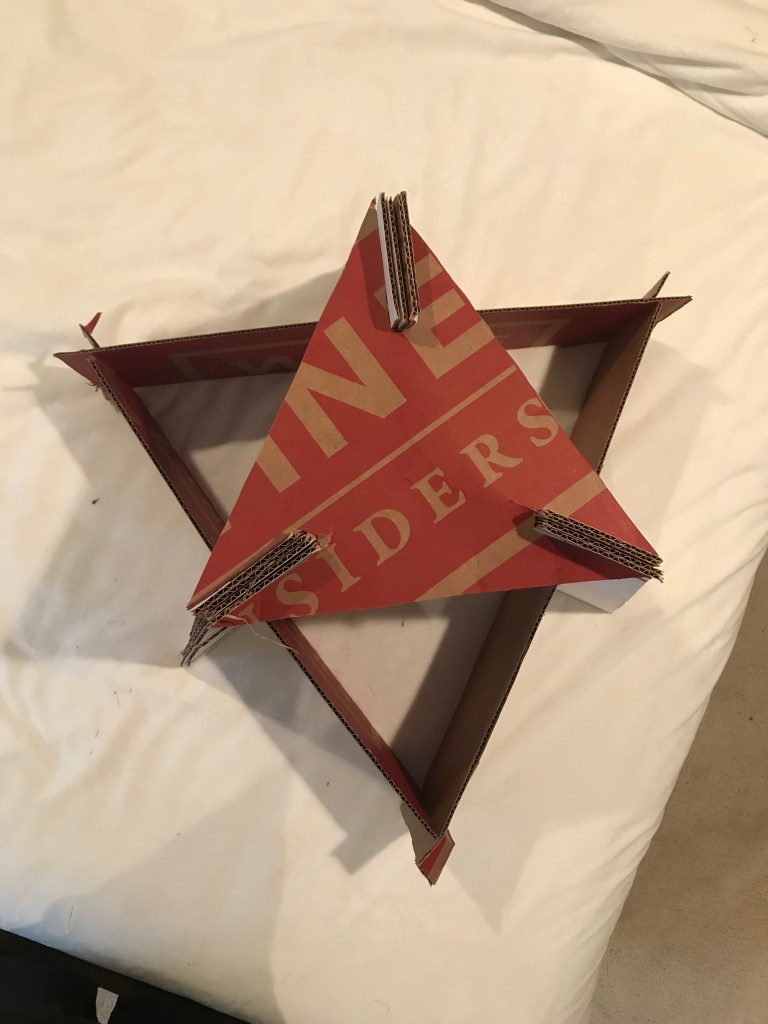
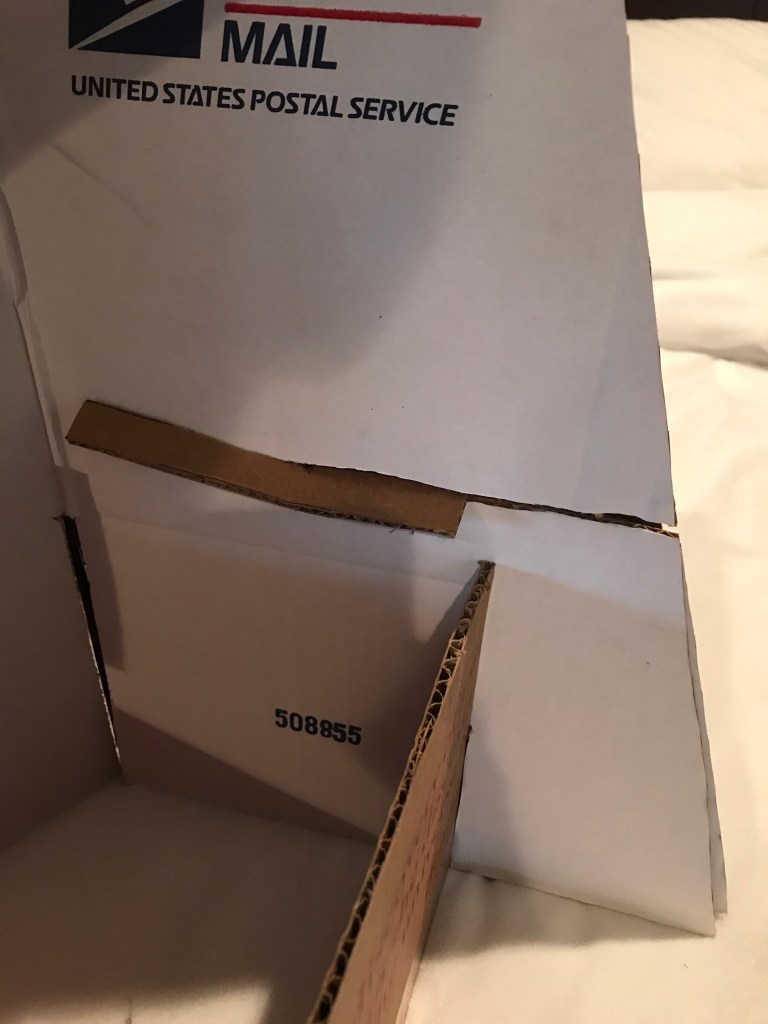
After testing, I realized that the stool was experiencing too much torsional force, to the point that it would warp and become weak with added weight. This was due in part to the lack of structure towards the bottom of the stool. Additionally, the pre-made folds in the original cardboard boxes would buckle under the stress, allowing the stool to twist. In order to combat this issue, I added the triangular frame to the bottom of the stool. While it is not the most aesthetically pleasing buttress, it allows the stool to bear my entire weight. All connections are accomplished via slots, located on each leg at the intersection with the base triangle and the center where the small pieces of cardboard are located. Over the coming days, I will be focusing on ways to improve the aesthetics of the design and potentially reimagine the triangular frame.
 Brian's 212 Understanding Architecture Section