Hanover Olympic building, Los Angeles, by TCA Architects
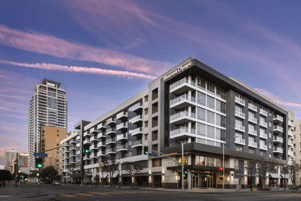
1. Sustainable Materials– the Hanover development group makes it a goal to create sustainably designed structures. For this building they used recycled glass and reclaimed wood. They also put solar panels on the building.
2. Urban Planning– I think this class would be essential when building housing. This building is L.A’s first “net zero” residential space.
3. Sociology – learning about the need for environmentally sounding housing closely ties to sociology and keeping up with how our society is adapting to climate change.
4. Structural Concepts- I think it is critical to be able to understand why a building stands and how to create it in the most efficient way.
5. Physics- Critical to be able to understand how a structure functions and how to create a safe space.
6. Building Technology- This design seems to integrate a lot of modern technology. This building utilizes solar power and sends power back to the cities utility grid.
7. Digital Drawing- As buildings become more and more inventive and use renewable products I think it would be important for architects to use digital drawing as a way to ideate and experiment before the actual product is built.
8. Architecture History/ Theory – critical for understanding the origins of architecture and how they are still influencing us today.
New course: Design for Change
This course would be for upper level undergraduate architecture students. It would challenge them to, over the course of a semester, design and create a model of a space that would fulfill a need within their community. This class would teach ideation, design, and building skills. The students would work in groups of four.
The students would go out into the community to explore areas that could use an architectural upgrade that would benefit the local population. The architectural program would collaborate with specific community areas such as homeless centers and health clinics that are in need of changes to their building to improve functionality. The class would be set up as a sort of competition, the best design would be built and integrated into the community. The students would base their design off of the specific needs of the people that utilize the space.
The purpose of this class would be to benefit the community through design while simultaneously teaching students how to: collaborate with an organization, learn professional practice, and see the process of ideation and design to a final product.
 Brian's 212 Understanding Architecture Section