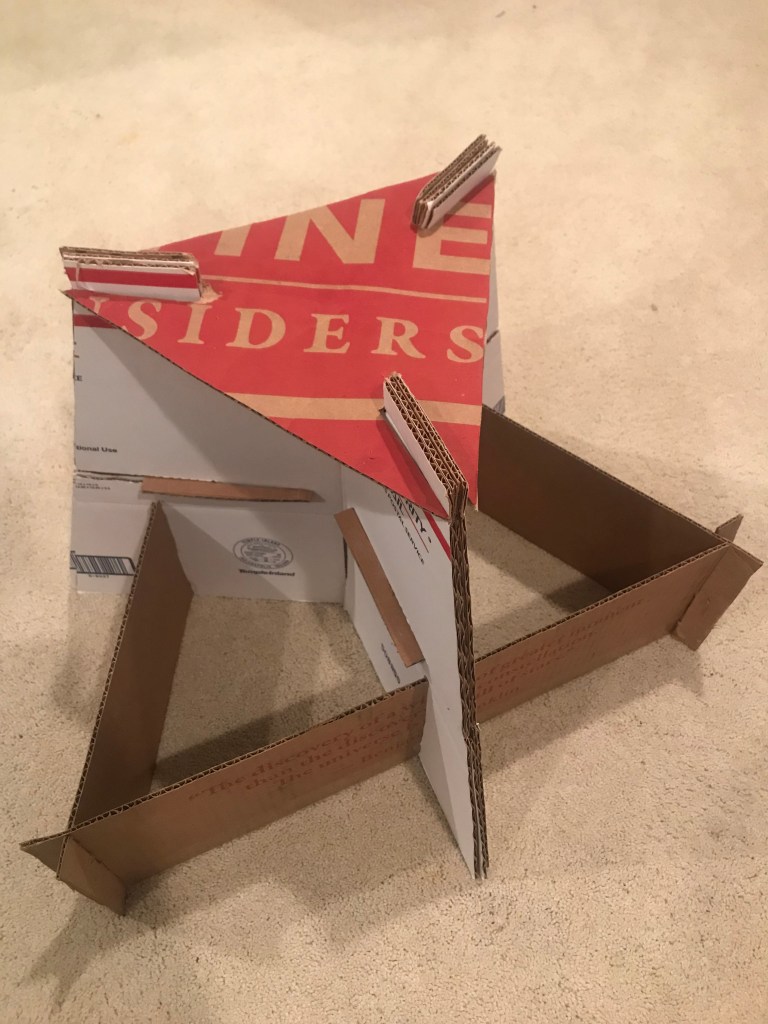
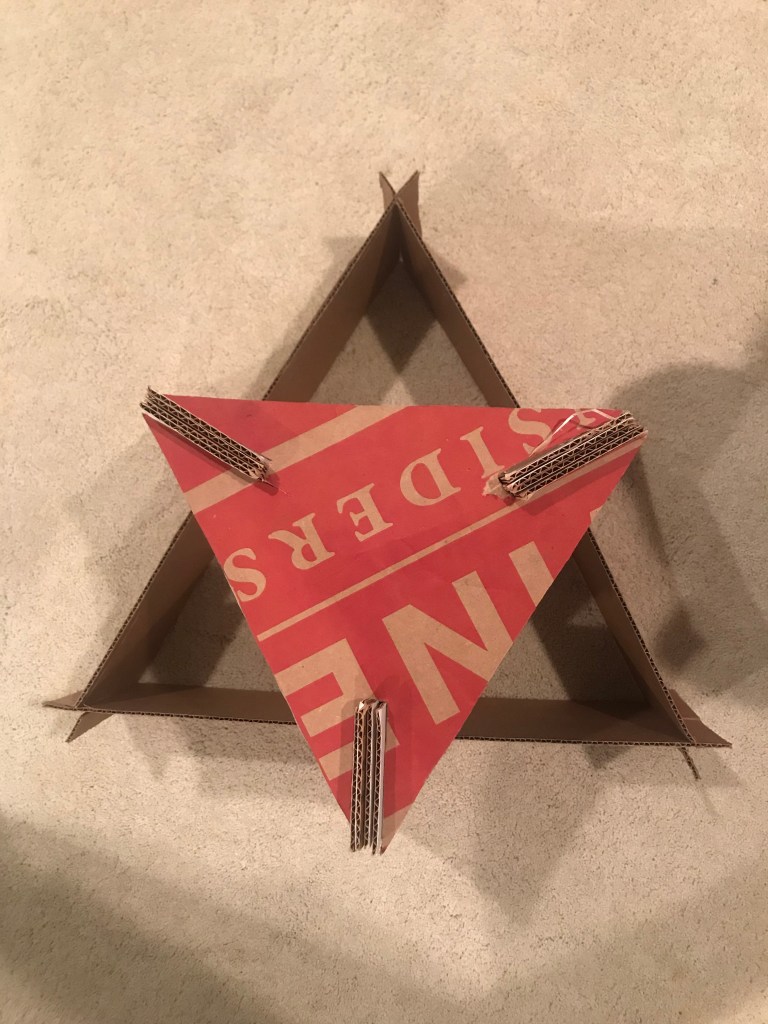
The creation process for my stool started with contemplating the base geometry I wanted to employ, as well as how to supplement that form. In previous stools, I noticed students utilized basic geometric shapes to distribute the weight, such as triangles, square cross hatches, and hexagons. I sought to do the same, but with the goal of creating a stool that resembled a real stool and employed a simplistic design, as my cardboard was limited. My initial sketches brought me to consider two basic forms: a three and a four legged stool. Both would utilize legs of the same geometry, with increasing thickness towards the base.
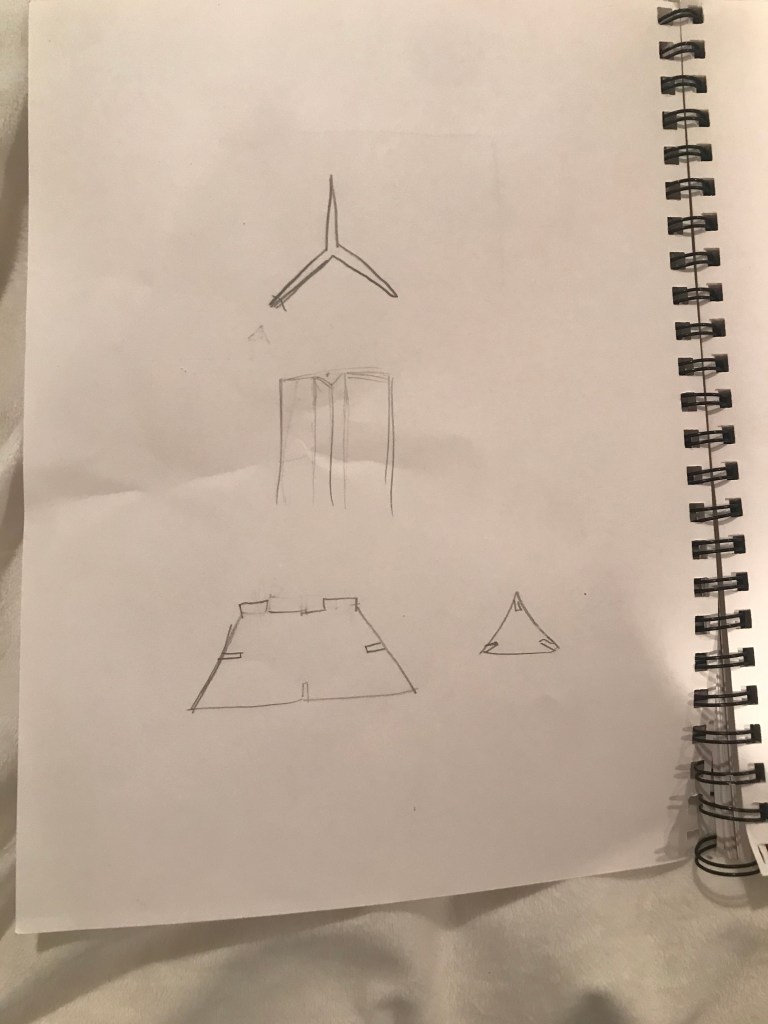
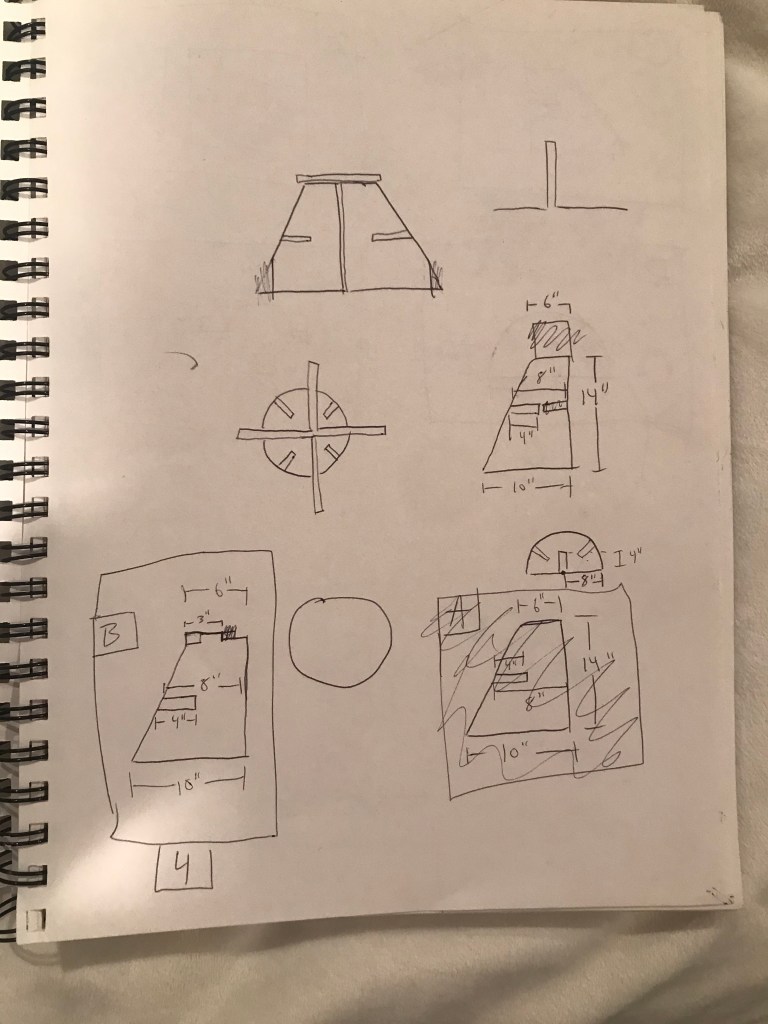
I used USPS boxes to construct the legs, cutting them about their folds to create pieces that were symmetric. This allowed one piece to support two legs of the stool while the range of motion of the joint permitted the use of either the three or four legged model. By taking this approach, I was able to test both iterations to determine which to use. Ultimately, I chose the three legged model as the one less leg allowed me to reenforce the entirety of the design. For each side of the stool, I utilized two of these pieces. As a result, each leg had a thickness of four pieces of cardboard, increasing the strength significantly.
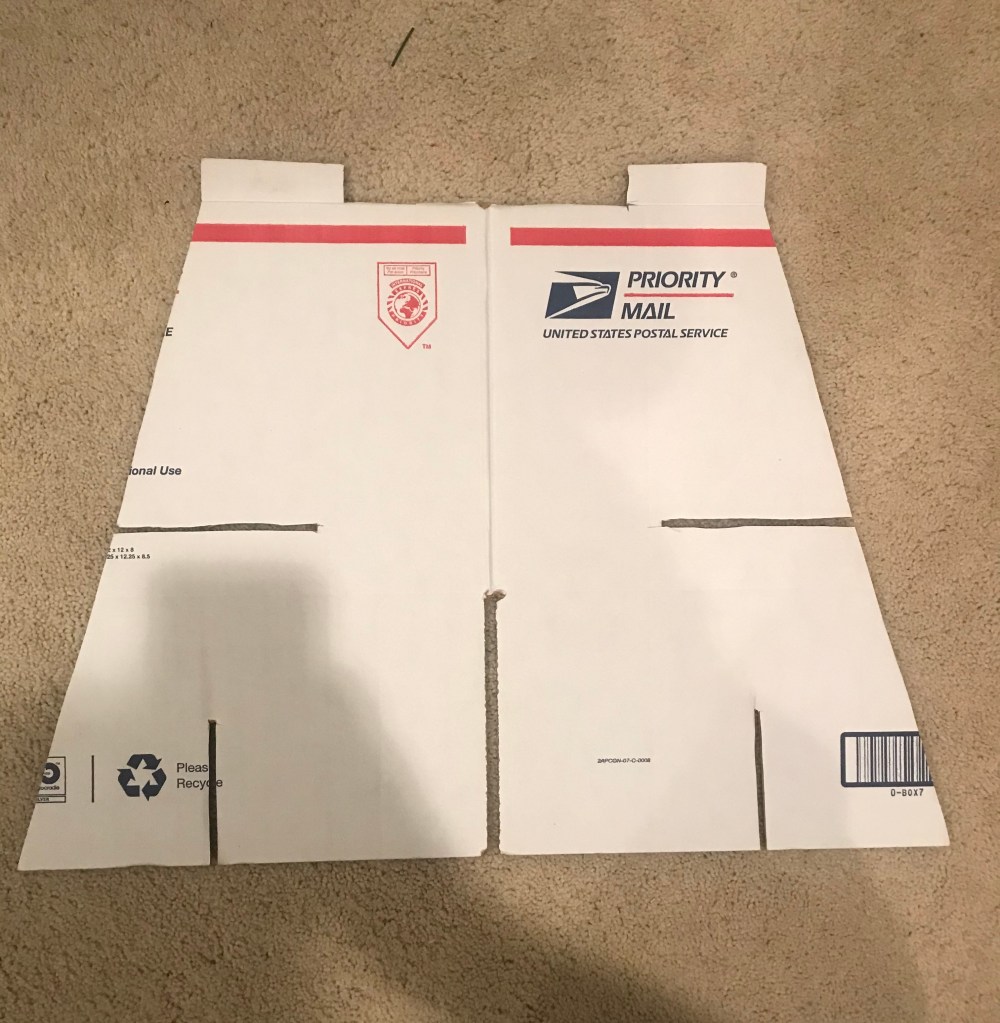
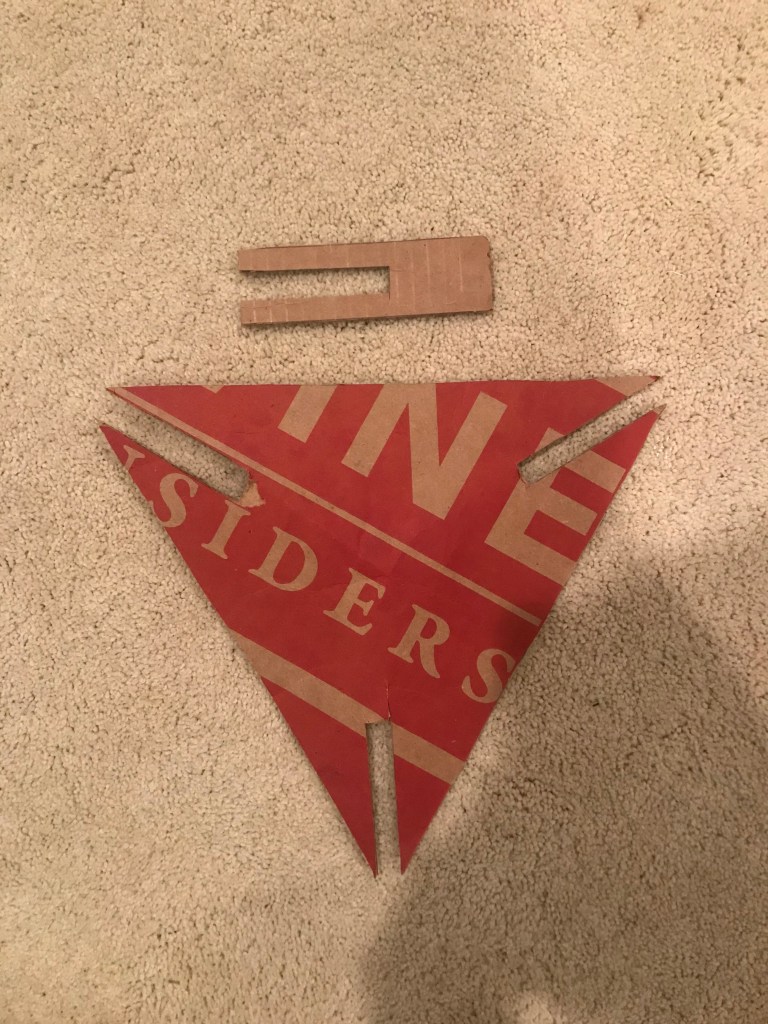
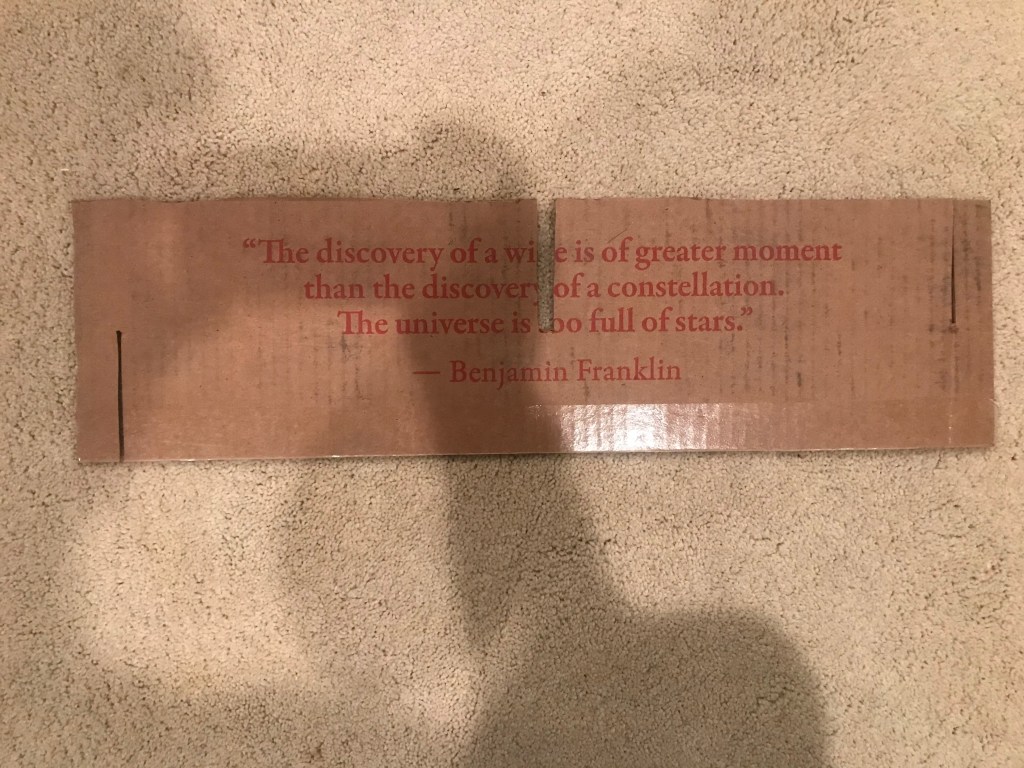
In order to hold the pieces together at each leg, I created small pieces of slotted cardboard, created slots on each sheet, and connected them. Additionally, the seat provided geometric structure for the legs, keeping them properly spaced. After testing, it became clear that more structure was needed. The stool would twist when under force, as the cardboard would bend at the creases in the USPS boxes. To combat this issue, I created a triangular frame from three equally sized pieces of cardboard. By bisecting these pieces with each leg, the stool received the proper structural support and could thus support my weight.
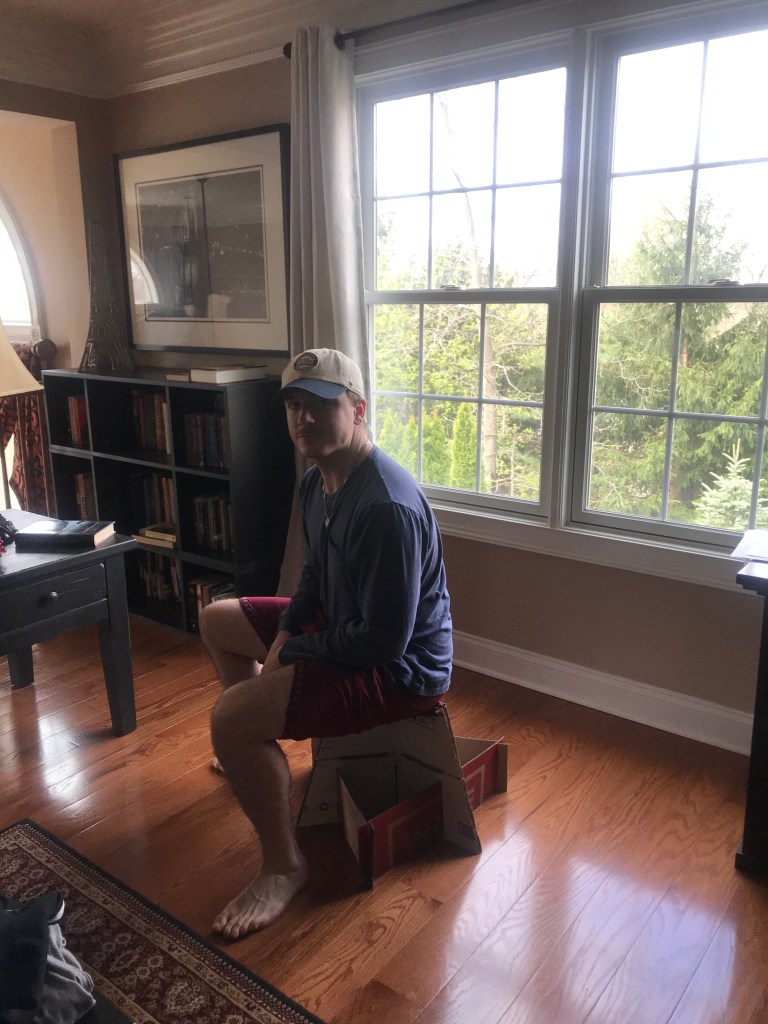
While my design is very minimalist in its aesthetic and structure, it accomplished the necessary task and properly embodied what I set out to create.
 Brian's 212 Understanding Architecture Section