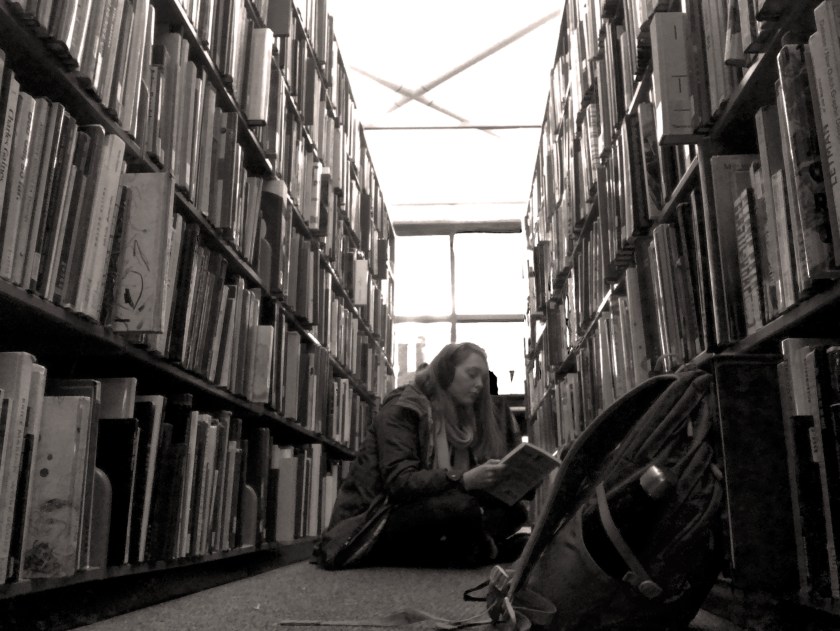
 Through my time at the University, I have realized that I have very little personal connection to any specific place on campus. Each year has been so vastly different from the last that it feels wrong to settle. The one exception is row 253 on the second floor of the Duderstadt library. This row of library shelves appears like all the rest, no wider than 3 feet with books lining floor to ceiling on old industrial metal shelves. It’s a very public space, with many people lined up on the desks facing the window. The room as a whole is a hub for quiet academics. I come to this row, this domain because even though it is so public, the space between the shelves is private.
I use the space differently than most. Although I feel like I use it for the true intended purpose: to look at and read the books. But who am I to say what the true intended purpose is. Just like in the Rasmussen article when he observed the group of boys playing with the architecture, I realized just how multifaceted a single domain can be. “My private domain is a part of their larger social domain” (Lavine 11). Although I hold no commercial ownership of my domain, I still get annoyed and frustrated when I see others pursuing it. Much like the anecdote about the front lawn in the Lavine reading, this public yet private domain binds me to a community. I do not have to pretend to be anyone but myself when I am alone between these shelves, yet I do not ever feel alone.
 Brian's 212 Understanding Architecture Section