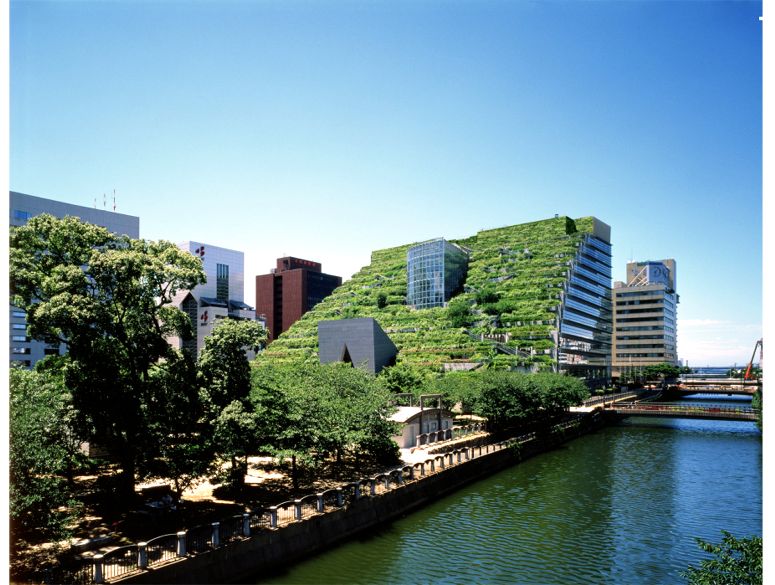
ACROS Fukuoka in Japan
DOCUMENT FIELDS OF STUDY:
- Graphic Communications- In order to create the design for this building, the architect must have a solid baseline in linear drawing and measurement/scaling.
- Physics for Architects- This course will allow the architect to understand the capabilities of their design and if the concept is even physically possible
- Digital Drawing- In order to create a building with the necessary precision the architect will need to be able to create a digital model.
- Construction- Similar to why physics is necessary, construction allows the architect to understand the physical capabilities of their design. The weight bearing points and gravitational limits will be evident in this class.
- Structures- Creating a small, physical model of the building can help the architect visualize the building in order to improve its shortcomings or further expand on the design.
- Environmental and Sustainability Course- This building is clearly eco-friendly due to the positive benefit that it’s many rooftop plants have on the environment. An understanding of the environment allows the architect to give their building a dual purpose.
- Urban Planning- An understanding of how buildings interact with their community will help in implementing this unique building into an already developed community.
- Physcology/Economics- An understanding of consumer preferences will allow the architect to create a building that people want. Is there sufficient demand for this many units of an apartment building? Do people really want their building to have a green roof or would they prefer a park that they can interact with?
INVENT:
Creative Architecture
In this course, the student will open up their mind to start imagining how simple buildings can become architecture. Architecture is a summation of “Fine Art” and “Functional Art”. The goal of an architect is to create a structure that invokes thought and aesthetic pleasure while simultaneously providing functional use. In the student’s future career, they will be expected to think outside the box in order to create structures that satisfy these criteria.
In Creative Architecture the student will be tasked with transforming “ordinary” structures into “extraordinary” works of architecture. Through pen and paper as well as digital design, students will take photographs of ordinary buildings and edit them to form creative works of architecture. These edits can be in the form of morphing walls, implementing eco-friendly improvements, ribbon windows, open floor-plans, or any other edits that the student feels will enhance a visitor’s experience at the building. The goal of this course is to open up the creative mind of the student and allow them to go over the top in their design freedom.
 Brian's 212 Understanding Architecture Section