DOCUMENT
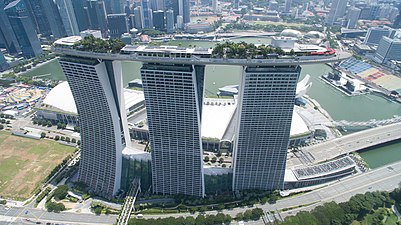
The Marina Bay Sands by Moshe Safdie Architects is a imposing structure, capped by its 340-meter long SkyPark connecting all three towers approximately 200 meters above the ground. The SkyPark seems to defy gravity with its 67-meter long cantilever past the north tower, yet this is representative of just one of many other fields of study that were essential to the successful conception, design, and construction of the building, in this case civil engineering.
Other fields of study include:
- Mechanical Engineering: used in over 500 hydraulic jacks and four movement joints beneath the pools to keep them level as the buildings themselves move so that water flows evenly over the edge of the infinity pools.
- Hotel Administration: the Marina Bay Sands is a hotel after all, so people with hotel administration degrees (or experience) were surely consulted to design the building so that it could be an effective, profitable hotel.
- Urban Planning: the hotel is part of a much larger complex spanning 20 hectares, and thus urban planners were probably required by the city to evaluate how the proposal would interact with the rest of the urban community.
- Environmental Engineering and Landscaping: to evaluate the environmental benefits of the gardens on the SkyPark, and to actually make them, respectively.
- Materials Science: to discern the most appropriate materials for the building, or even engineer new ones.
- Technical Drawing: to draw the precise specifications the builders would follow
- Law: to make the contracts between the bidder for the site/owner of the building (Las Vegas Sands) and everyone else.
INVENT
A new capstone course necessary for architects to better serve the world is Affordable Architecture. This course consists of trips at the beginning of the term to impoverished communities living primarily in self-constructed shacks to study and critique the manners in which these dwelling are constructed. Throughout the rest of the term, students are then tasked with designing more architecturally influenced housing with similar budgets and materials as these dwellings–this is to say that they give the dwellings the actual function of being homely and welcoming rather than simply the use of shelter in order to improve the lives of the inhabitant and also destigmatize these communities. The principle is that the students should be able to achieve this function by using the materials more efficiently both structurally and artistically due to their education. It will also help bridge the gap between education in the “institute” (college) and through practice by giving the students firsthand experience in interacting with clients, working with physical and budgetary restrictions, and creating livable-scale buildings, all without needing an internship. Furthermore, this course does so on a relatively modest budget due to the nature of the homes, and perhaps most importantly creates more functional and useful homes for people who need them.
 Brian's 212 Understanding Architecture Section