Blog Feed

Reading Response 01: Public’s Private Domain

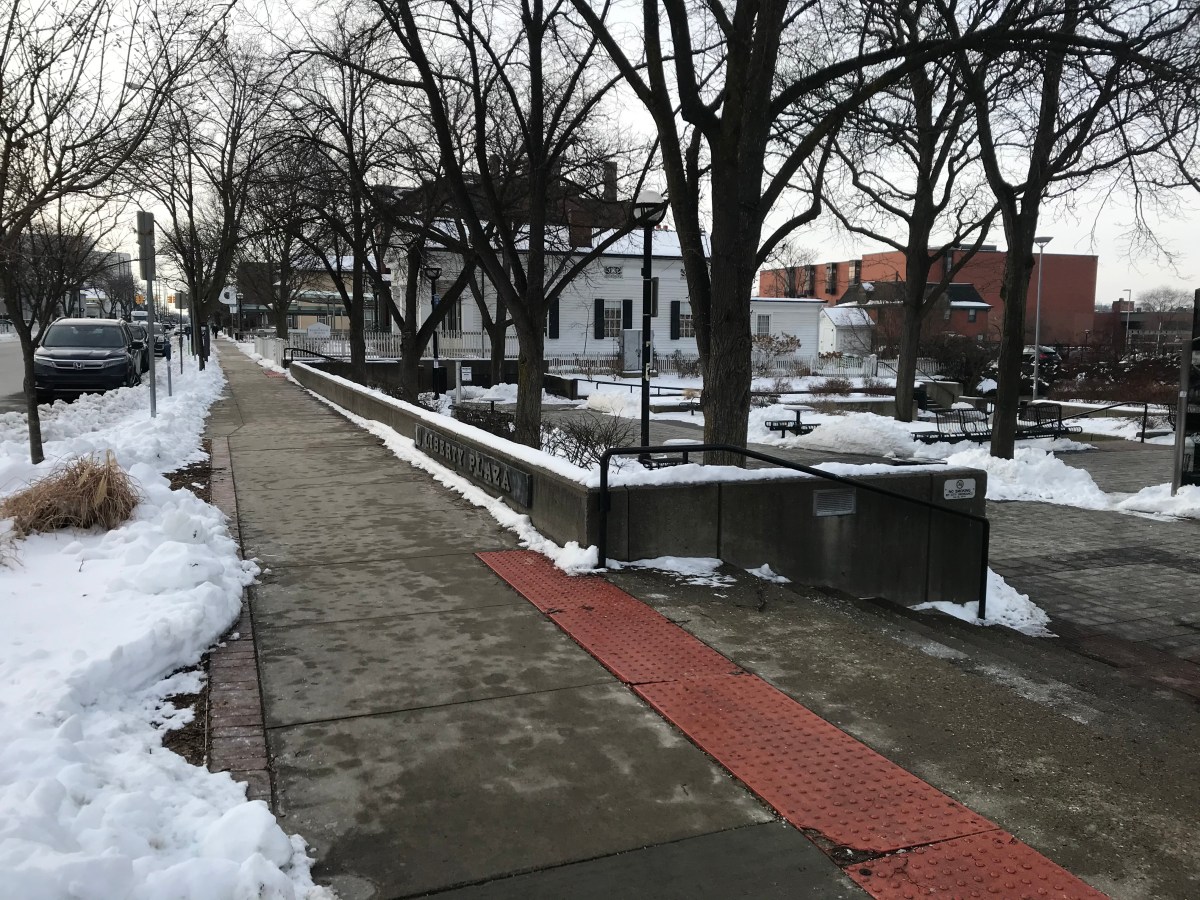
Almost every day, I pass by downtown Ann Arbor’s practically infamous Liberty Plaza. Originally designed to purposely keep a space of greenery in the increasingly urbanized city, there certainly are some obvious differences between this space and its surroundings. Urban planners decided that this green space would hopefully be a sanctuary in the city for people to stop and get away from the business and slow things down a bit, chat over some coffee, meditate, or just get some peace and quiet. Similar to how Lavine describes the way shopping centers provide a solace and relaxing environment for busy suburban people, this was also supposed to be a relaxing venue. While an appropriate and welcome domain for a pretty hectic city, it doesn’t seem to characterize that domain anymore.

The space is so out of the way and separated from the sidewalk and the people, that its initial intentions were not practical. Rather the sunken-in and limited access nature of the plaza makes it an almost unwelcoming space. It simply wasn’t convenient for people to integrate time spent here into their daily lives. Rather the space has essentially turned into a place where many people cut through but never stay and where homeless people spend their day. While the park was intended to be for everyone, this single factor makes it undesirable for others to want to enter and stay.

This space was designed to create two separate domains and it does, but just not the original intended one. I find myself having no want to enter and when I visited inside to take pictures, the sunken elevation certainly was a factor I hadn’t at first considered. You feel like you’re being looked down upon and the further down you go (since there are multiple levels of depth) the worse it gets. I just wanted to leave as soon as I entered the park and I can barely begin to understand how those who may be less fortunate might find it a place for them.

It has become a place now where residents of Ann Arbor know to avoid and clearly separates this plaza as its own domain. Rasmussen states that “Architecture is produced by ordinary people; therefore it should be easily comprehensive to all.” (14) Liberty Plaza could’ve been a domain of gathering and relaxation for all that the rest of downtown Ann Arbor lacks. But due to poor design and planning, it is a very disconnected domain that creates division in the midst of a public environment, which certainly shouldn’t be any architect or planner’s goal.
Reading Response 1: Lionhearted Domain

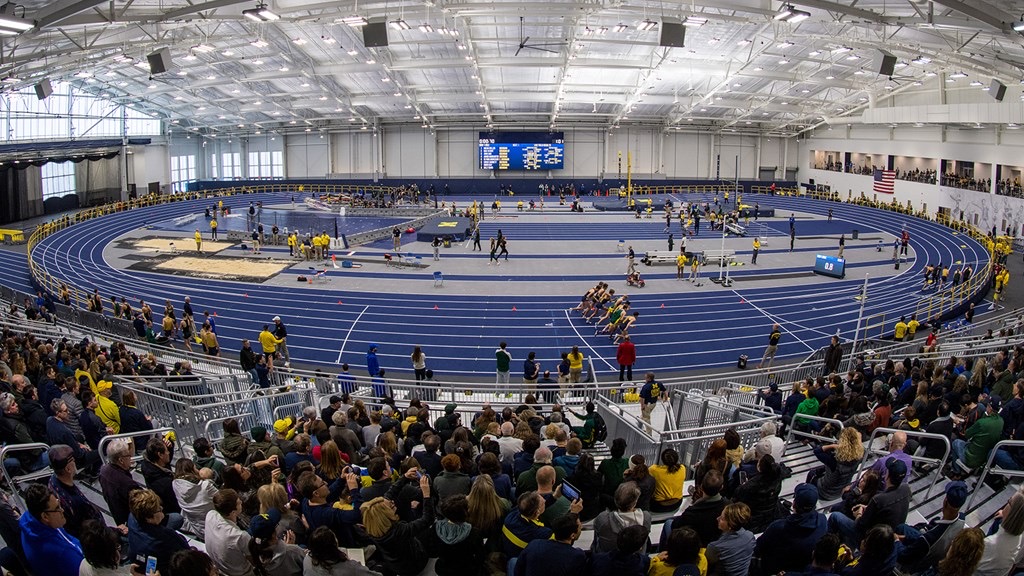
My chosen domain is the University of Michigan track and field facility, where the team competes and practices. There are several visible domains within the image, and they are arranged similarly to how domains began in the first place: specialization. As stated in the Lavine reading, people began to be tied to land as a result of a local resource being essential for their special occupation or needs (Lavine 25). In my chosen domain, there are several areas in which the occupation or purpose of people during a track meet determines how people are organized. 

For example, only the racers and race officials are allowed on the track, as indicated by their special clothing (race uniforms and red race official jackets. On the inside of the track, competitors, officials, and meet volunteers are present, and are wearing their matching clothing to indicate they also belong. In the stands visible closest to the vantage point, the people are much less uniform, and shows that these are the spectators have no purpose besides supporting the competitors and watching the meet. There are subdomains within the stands, that can be indicated by the stairs that separate the sections, and the change in color of the spectators clothing (supporting different teams). Along the right side of the image, you can see people sitting in the stands along the balcony for the athletes and staff to support their team from. The elevated surface and exclusiveness of this section implies that its inhabitants may have a more important role in the track meet. This domain is also split into subdomains by the beams that lie between the bleachers, separating athletes, staff, and meet officials. I would name this the “lionhearted domain”.

Pond Lawn Domain

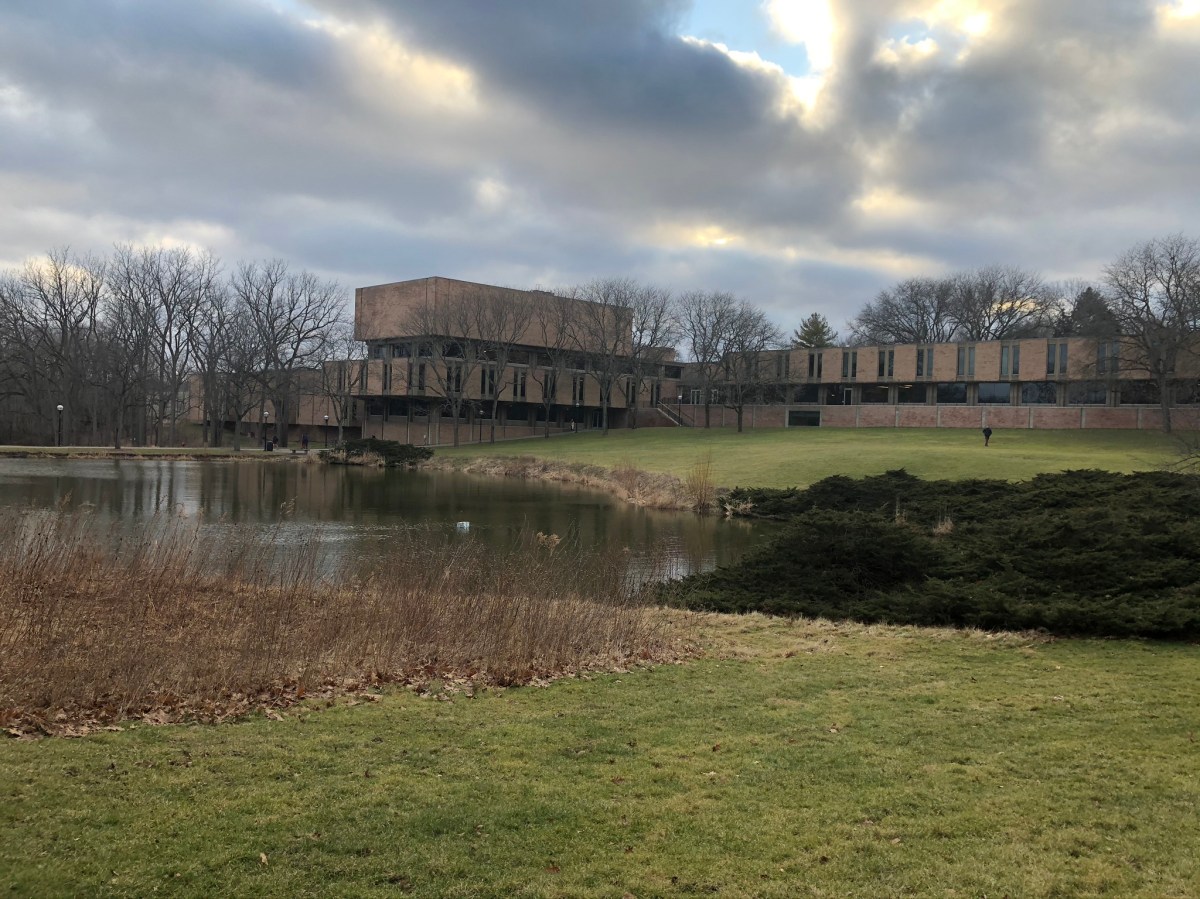
The domain I chose is the pond lawn domain. Encompassed by Eero Saarinen’s Earl V. Moore Building, housing the school of music, on two sides, and by forest on the remaining two sides, this peaceful spot of greenery is unknown to most students at the University. However, this adds to the magic of the pond lawn; you are largely left alone to absorb the charm of nature, to soak up the sun on warm summer days, or watch the snow fall on typical Michigan days. It is a public space, yet a domain where you infringe on no one else’s space and no one infringes on yours. This provides a feeling of comfort, because as Lavine explains, “Domain begins with a sense of our own bodies and a distance around them that we consider to be our own territory. Invasion of this boundary produces discomfort,” and at the isolated, hardly occupied pond lawn, there is enough space for anyone who dares venture those 50 yards from the rest of North Campus. The grace of this open green, open space is that it fulfills a role missing at the rest of North Campus. Between all the buildings and the seemingly random paths of the Grove connecting them, there is little space that can be used to the students’ discretion. What green space there is is not large enough to play sports, nor is it peaceful enough to study. At the pond lawn, students have an unparalleled freedom. They can come with a friend and a ball and play catch, or bring their laptop and book and study on the grass, enjoying the natural beauty and silence of the domain. On the rare warm days, students can even work their way into the little notch in the bushes surrounding the pond, sit on the tiniest of beaches, and dip their feet into the water, letting their worries dissipate through their feet into the pond as they relax in the peace, beauty, and sunlight of the pond lawn, a feeling desperately needed in the stressful college environment we all live in.

Pup Domain

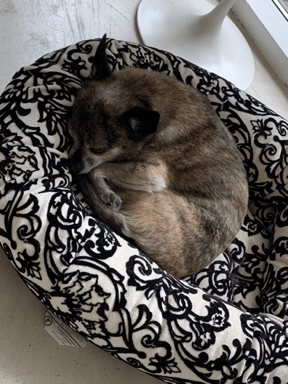
This is my dog Ted sleeping on his bed. Being only six pounds, he does not take up a lot of space or “domain” in our home. But there are some areas that he feels he has rights to and spaces that only he utilizes. In these spaces, which include this bed, he feels safe and secure, and confident that he can rest and relax peacefully. His bed is so small that of course only he can use it and it would never be used by a member of our family. At the very beginning of the Lavine reading there is a quote that inspired me to photograph my dog in his domain. “Human beings share with other animals the need to mark territory that they are able to control.” Dogs innately defend and protect their territory. We used to have two dogs. Teds older brother Nacho passed away earlier last year. When they were both attempting to protect their own territories,  conflict occasionally arose. Ted has always had a strong attachment to his black and white bed and did not appreciate when his older brother inhabited it. In the second reading Rasmussen states “Many animals are also able to create a shelter for themselves, by digging a hole in the ground or building some sort of habitation above it.” While Ted did not “create” his bed, he claimed it as his own in a very animalistic way despite living a very luxurious and fabricated lifestyle in the home of humans. Ted’s domain is one that provides him comfort and safe-haven. It allows him to roll in a little ball and take a nice long nap. While it is a simple domain, it is a key part of his existence, similar to many dogs across the world. 

Reading Response 1: Public View Domain

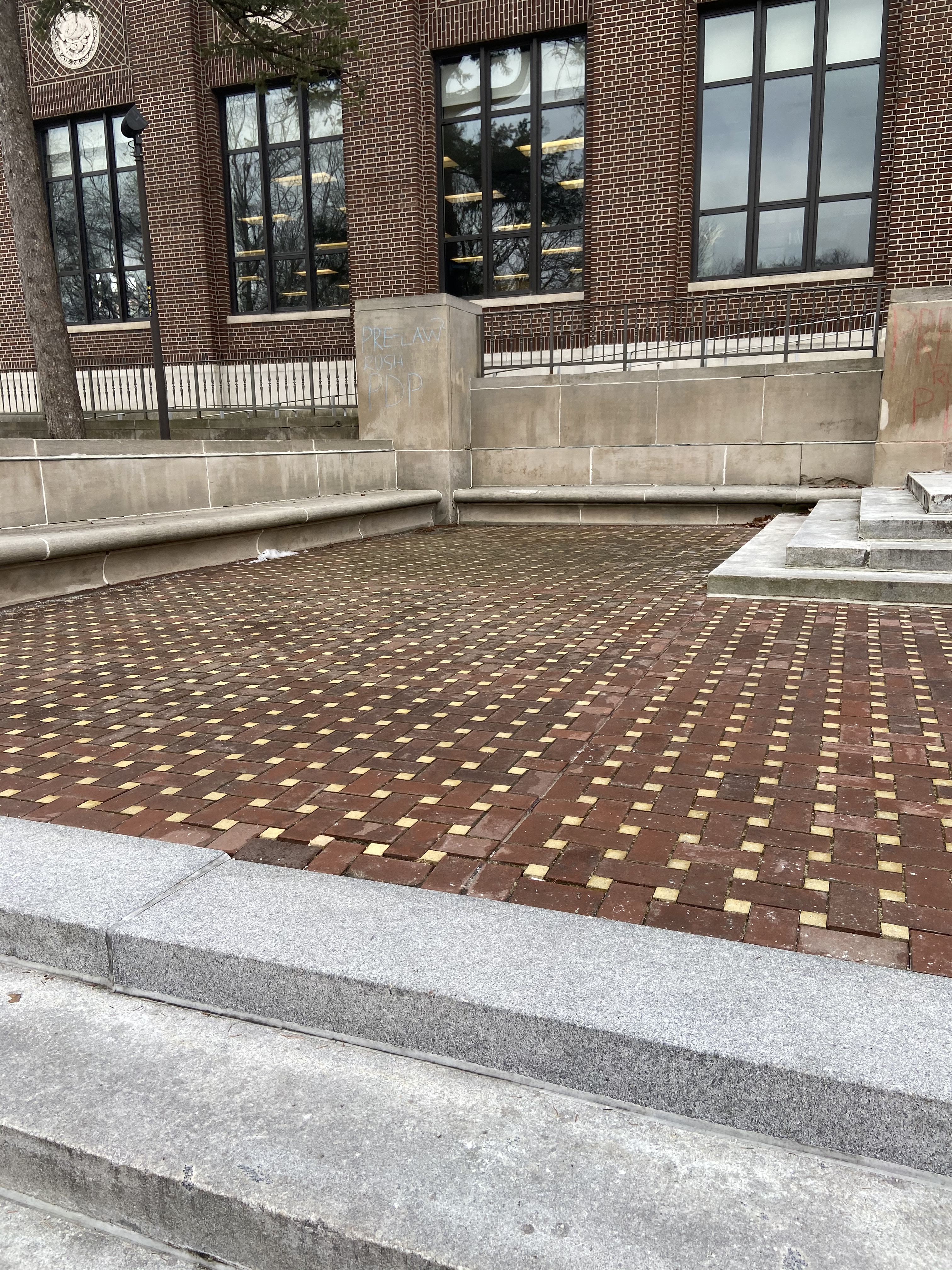
This space represents a domain that can be used by anyone at any time. There is no opening or closing time. There are no restrictions on who may use this space. However, when viewing this space there is a certain sense of who it belongs to. A University of Michigan student would feel more comfortable sitting on this bench than a non-affiliated Ann Arbor residence. Although this space provides very little guidelines for who is allowed to use it and for what purpose its positioning on the steps of the Graduate Library makes it feel more welcoming to students. This space provides a perfect view of Michigan students passing through the Diag on their way to and from class. While these students quickly cross through the Diag while paying little attention to their surroundings, the person who chooses to sit on this bench is in a very different state. Although only steps from the chaos of the Diag, this space represents a calmness and opportunity for reflection as you passively watch students frantically walk to class. This bench offers a reprieve from the stress and chaos of a Michigan student’s schedule. It gives you an opportunity to sit down and relax in a quiet place at the epicenter of campus while the chaos operates around you.

IMG_0308

Introduce Yourself (Example Post)

This is an example post, originally published as part of Blogging University. Enroll in one of our ten programs, and start your blog right.

You’re going to publish a post today. Don’t worry about how your blog looks. Don’t worry if you haven’t given it a name yet, or you’re feeling overwhelmed. Just click the “New Post” button, and tell us why you’re here.

Why do this?

  • Because it gives new readers context. What are you about? Why should they read your blog?
  • Because it will help you focus you own ideas about your blog and what you’d like to do with it.

The post can be short or long, a personal intro to your life or a bloggy mission statement, a manifesto for the future or a simple outline of your the types of things you hope to publish.

To help you get started, here are a few questions:

  • Why are you blogging publicly, rather than keeping a personal journal?
  • What topics do you think you’ll write about?
  • Who would you love to connect with via your blog?
  • If you blog successfully throughout the next year, what would you hope to have accomplished?

You’re not locked into any of this; one of the wonderful things about blogs is how they constantly evolve as we learn, grow, and interact with one another — but it’s good to know where and why you started, and articulating your goals may just give you a few other post ideas.

Can’t think how to get started? Just write the first thing that pops into your head. Anne Lamott, author of a book on writing we love, says that you need to give yourself permission to write a “crappy first draft”. Anne makes a great point — just start writing, and worry about editing it later.

When you’re ready to publish, give your post three to five tags that describe your blog’s focus — writing, photography, fiction, parenting, food, cars, movies, sports, whatever. These tags will help others who care about your topics find you in the Reader. Make sure one of the tags is “zerotohero,” so other new bloggers can find you, too.

Design a site like this with WordPress.com
Get started