

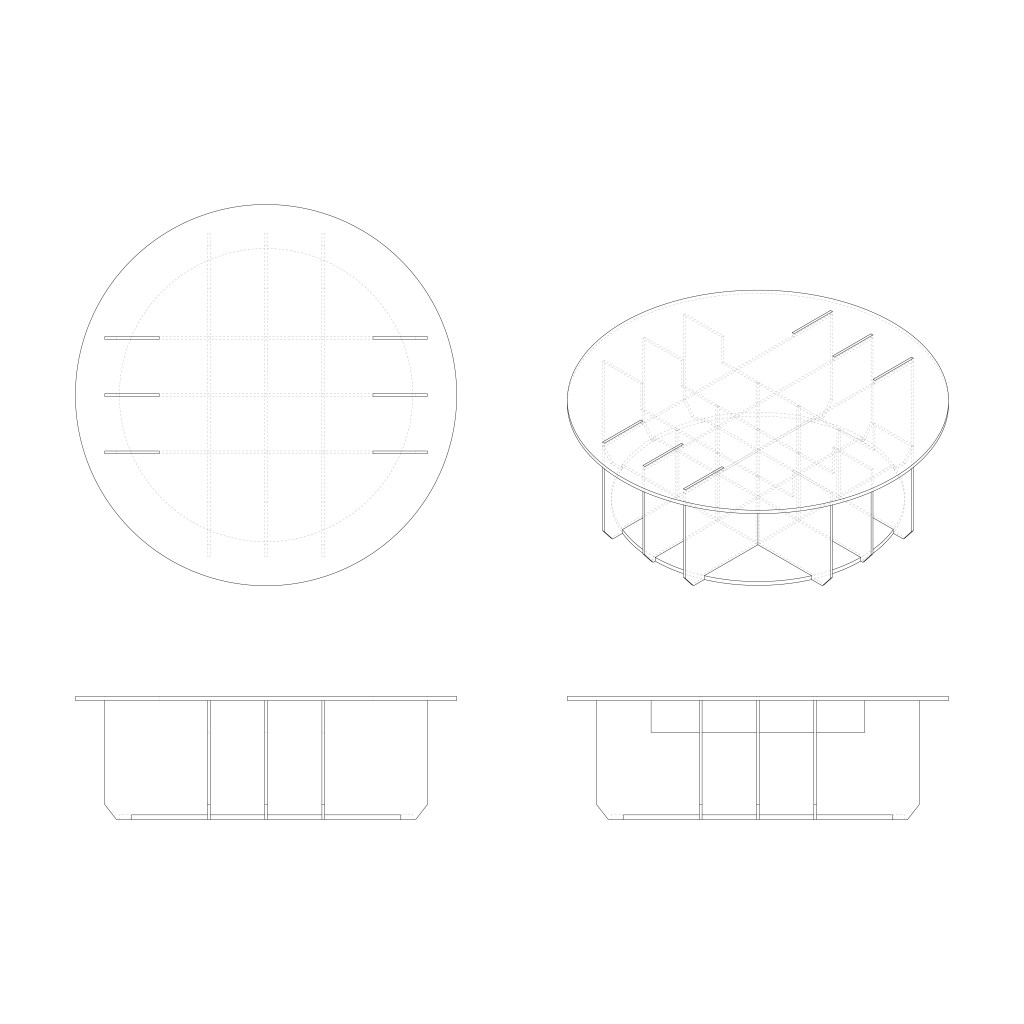
I used Rhino only briefly a few years ago, so modeling the stool was a challenge. It took a long time and the stools don’t look exactlyyy how I would like them to, but this was the final result!
I used Rhino only briefly a few years ago, so modeling the stool was a challenge. It took a long time and the stools don’t look exactlyyy how I would like them to, but this was the final result!
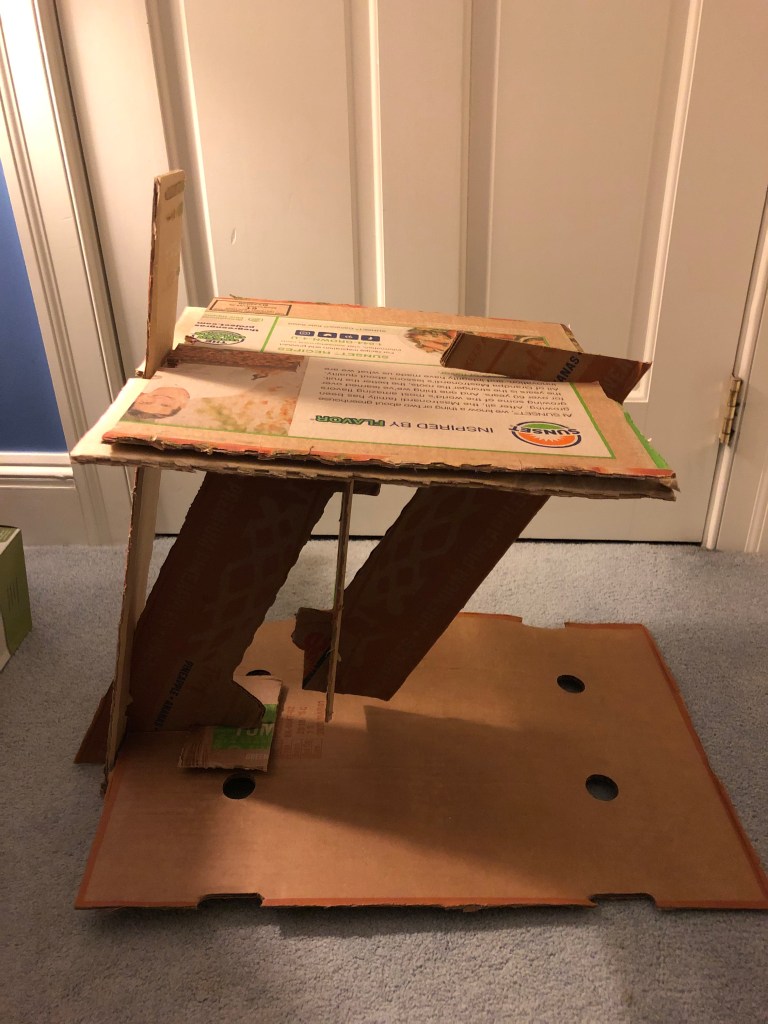
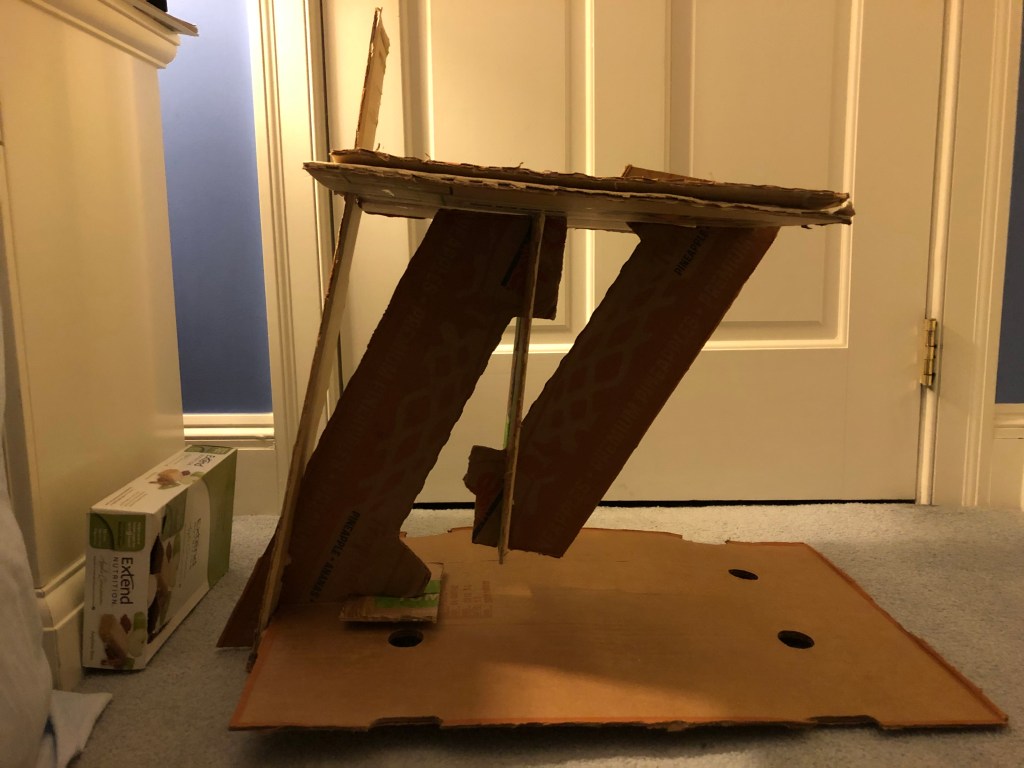
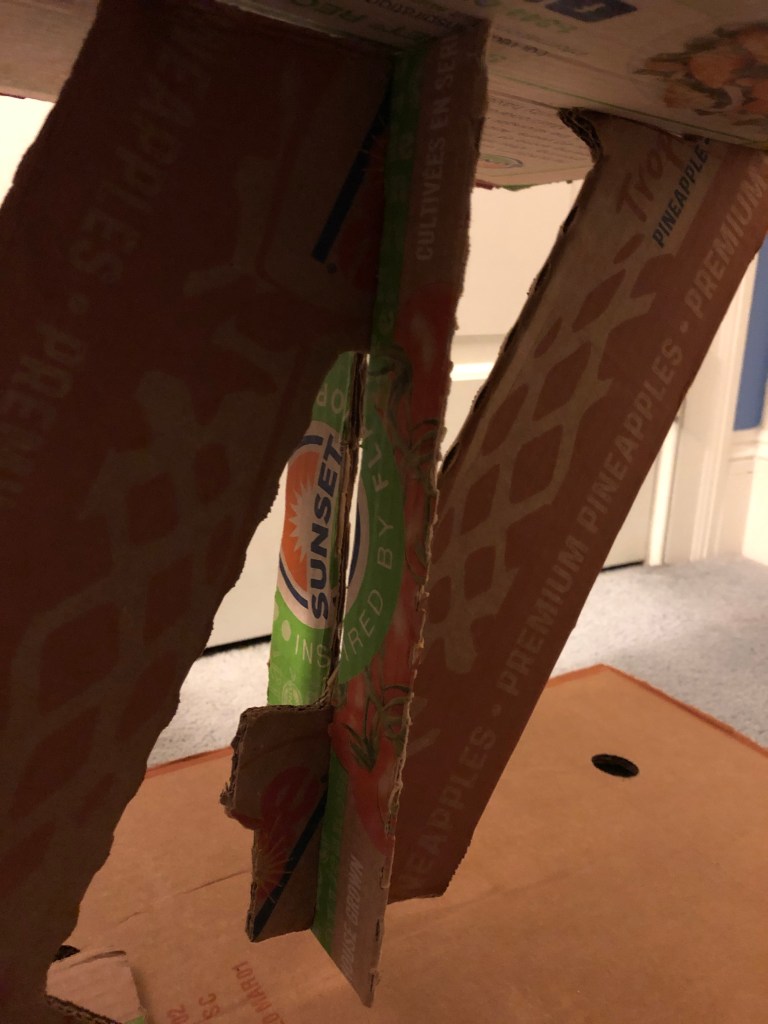
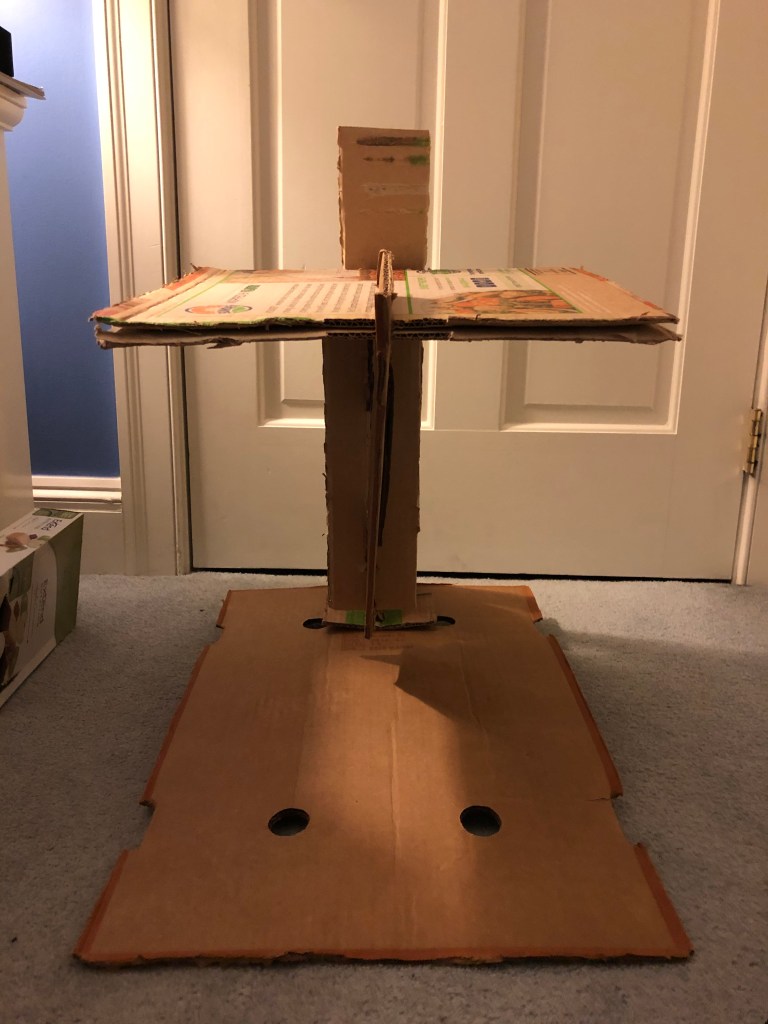

With only one John’s Pack & Ship box to use, I had to make use of every single inch of cardboard that I had. My intention was to make a dissymmetric, off-centered, and somewhat off-balanced stool.
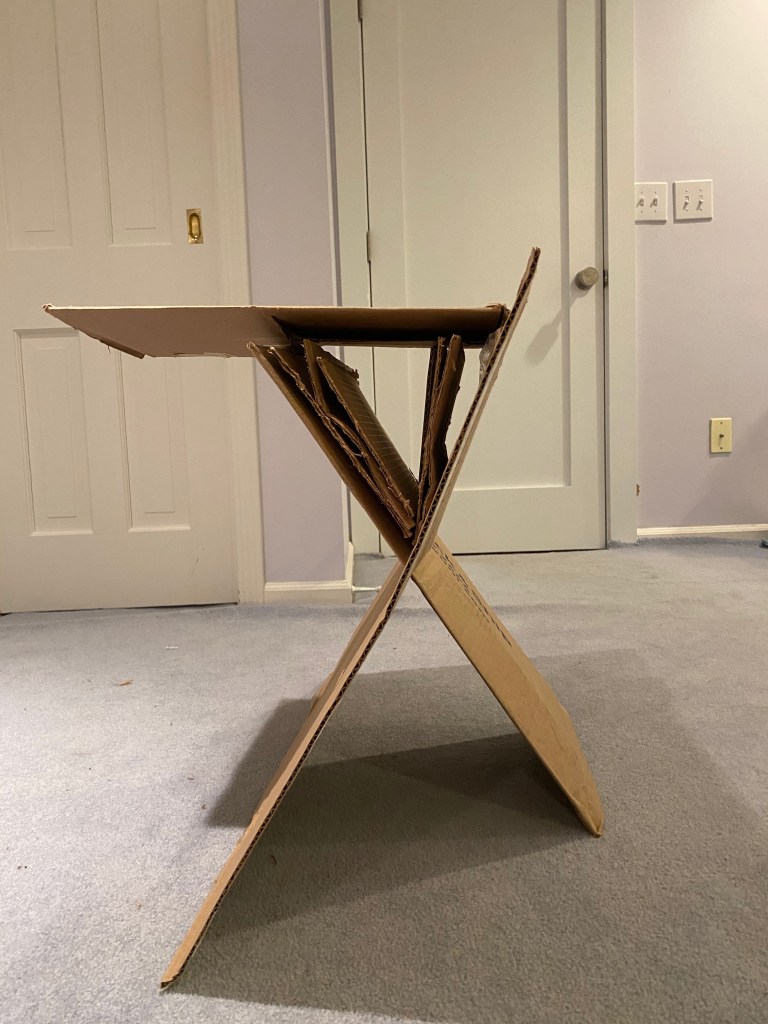
However, since this box had already been shipped, it was damaged, flimsy, and wouldn’t support the weight of a person. However, I found that it does support the weight of my laptop, so I found other uses for it.
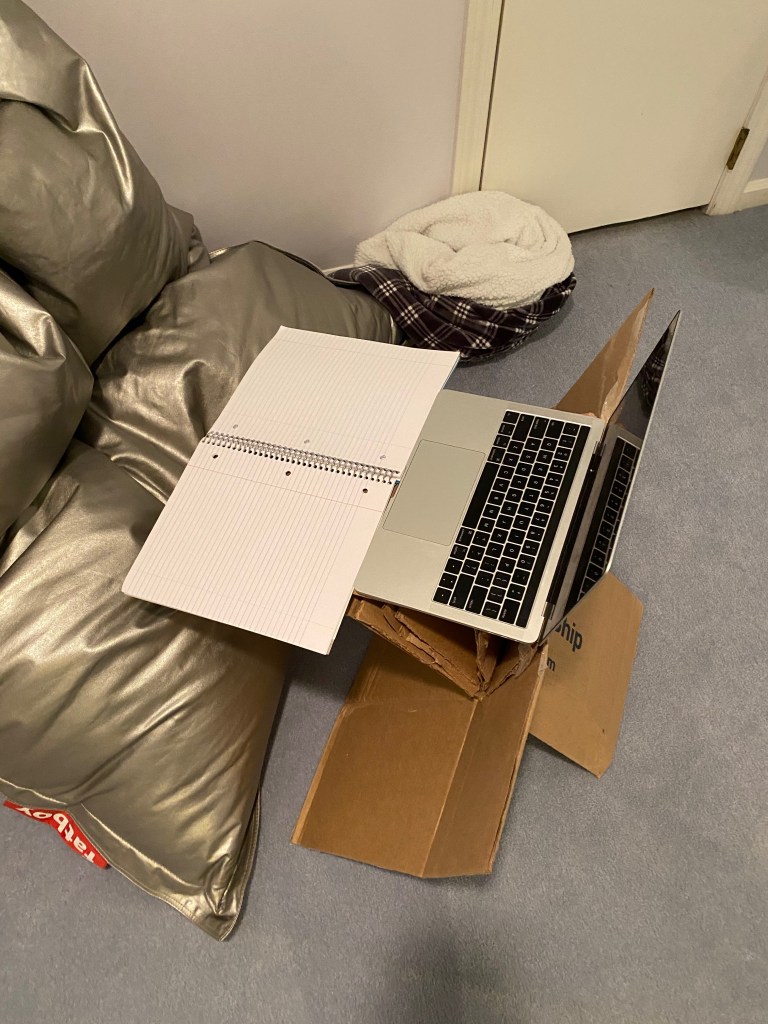
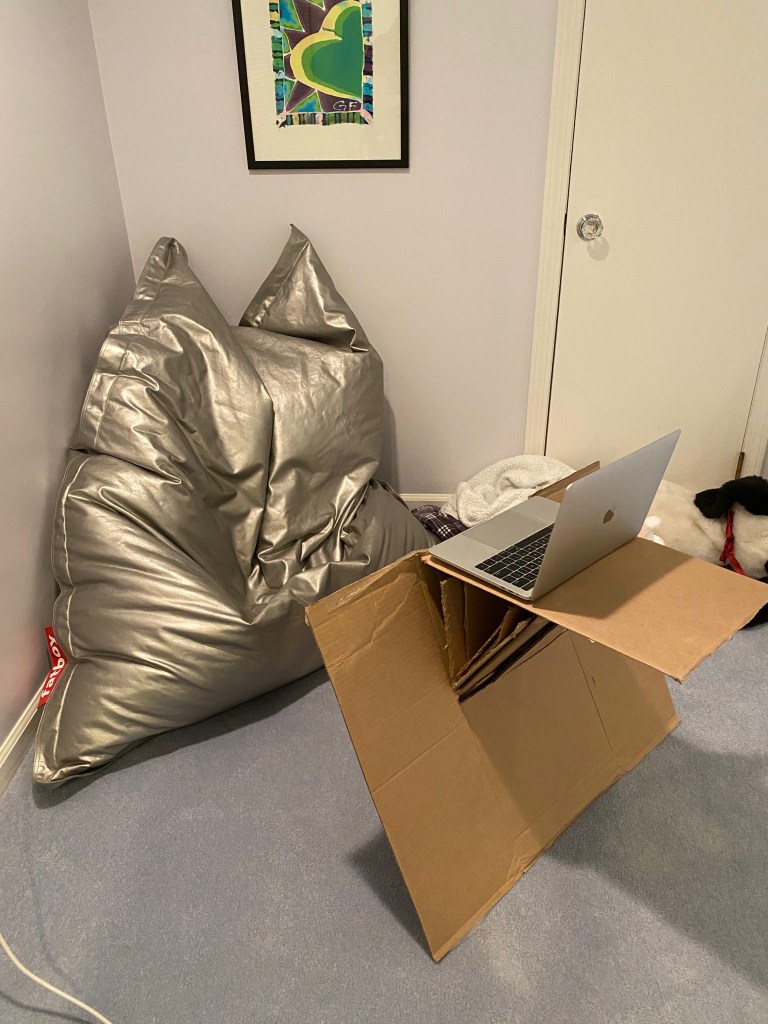
This stool can be converted into a desk that is long enough to fit my computer directly behind my notebook, an ability that my current desk lacks. I can also put the stool at the edge of my bed, making a perfect bedroom theatre. Additionally, the piece of cardboard that supports the seat can be folded in, making the stool portable. So, this stool could be a tiny picnic table too.
In this project, my main focus was intuitive assembly. I needed to implement a linear construction pattern that would wouldn’t necessarily need an instruction document for someone to figure out how to use it. With easy construction, I couldn’t let it come at the cost of strength and durability.
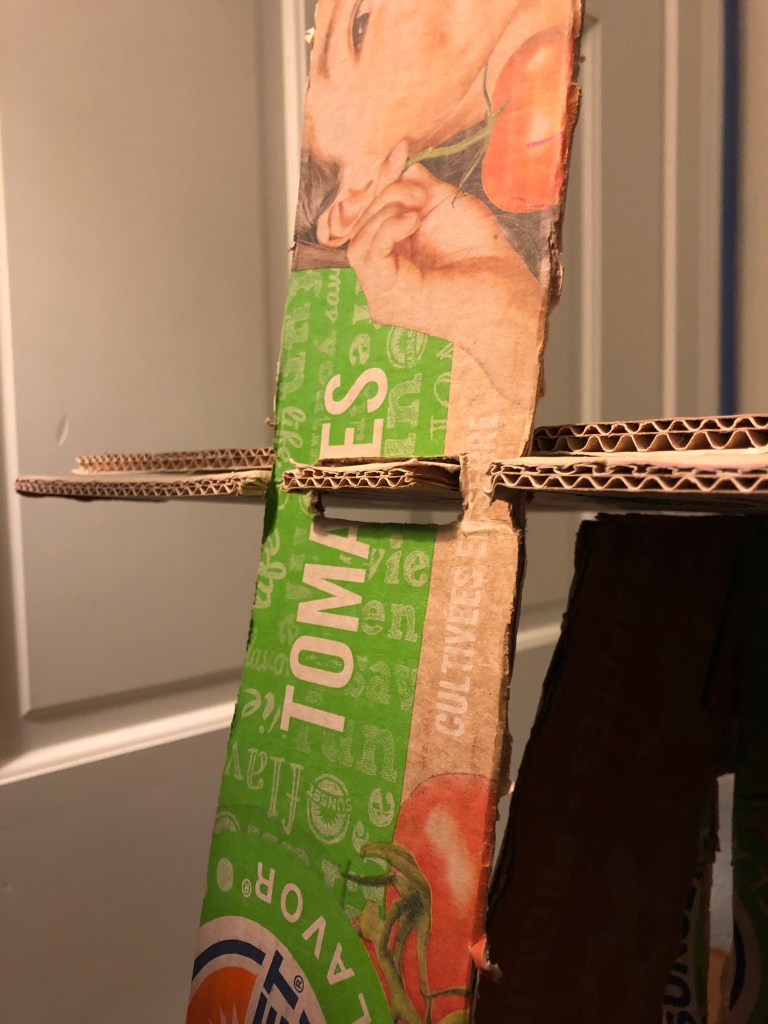
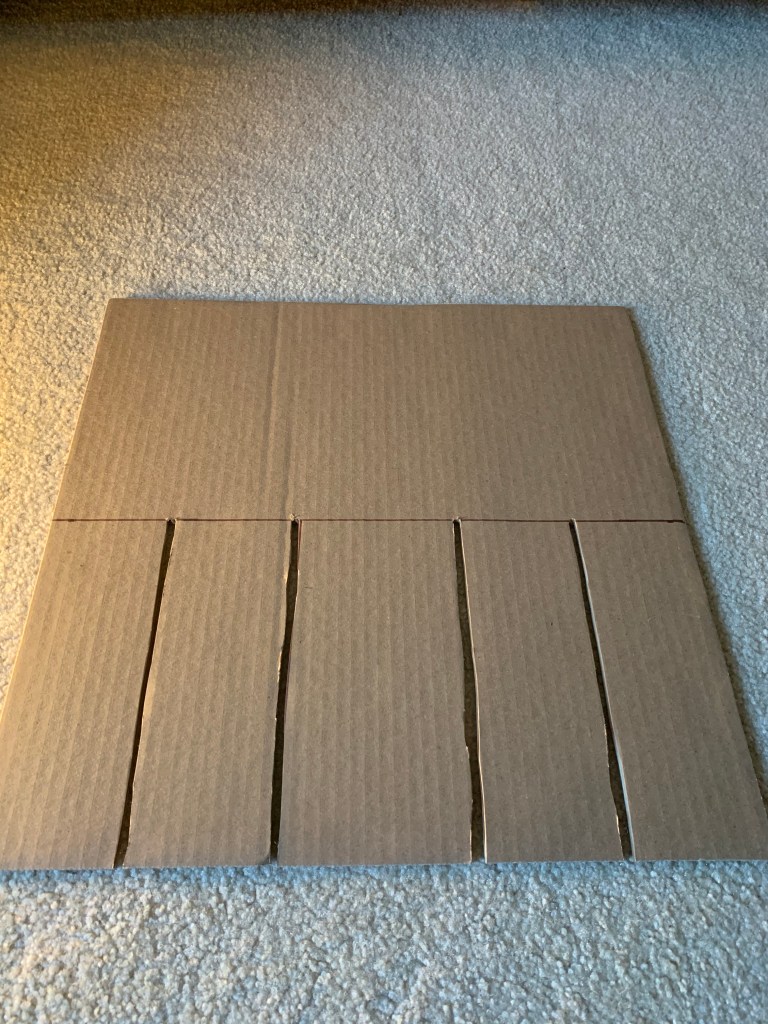
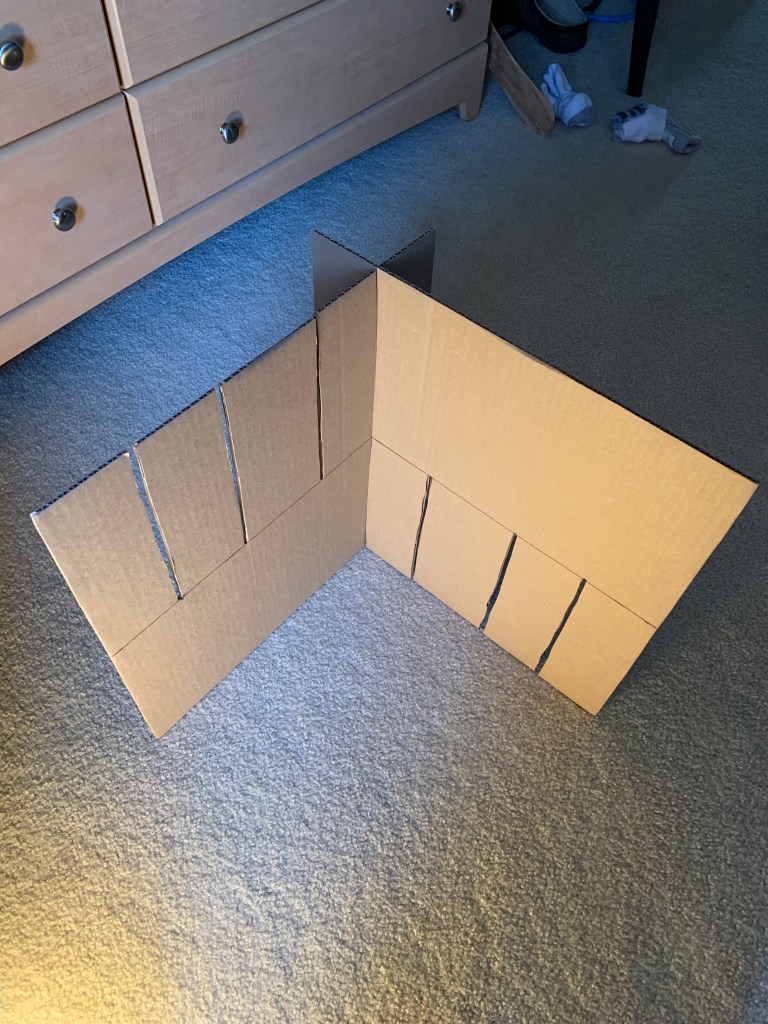
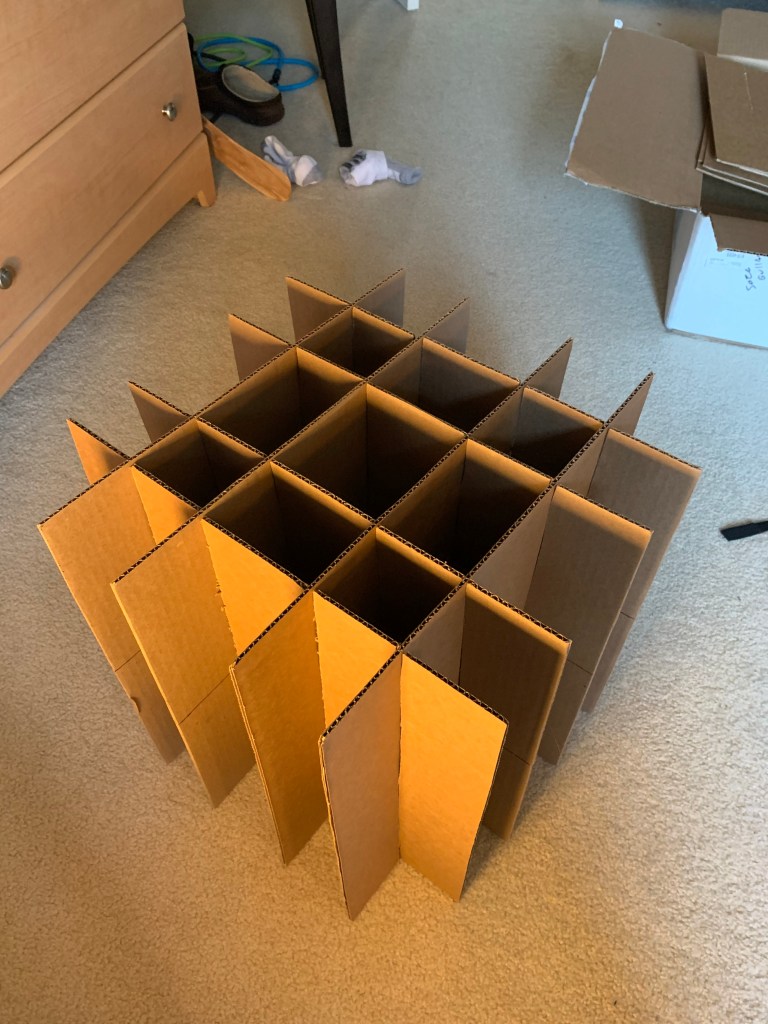
I made an interlocking system that includes 6 vertical slices of cardboard that interlock with one another, and are reinforced on both the top and bottom to prevent shifting and bending in any other direction. Everything comes apart vertically so the intentionality and careful thought of the assembly process shows the user that this is an accessible and moveable object.
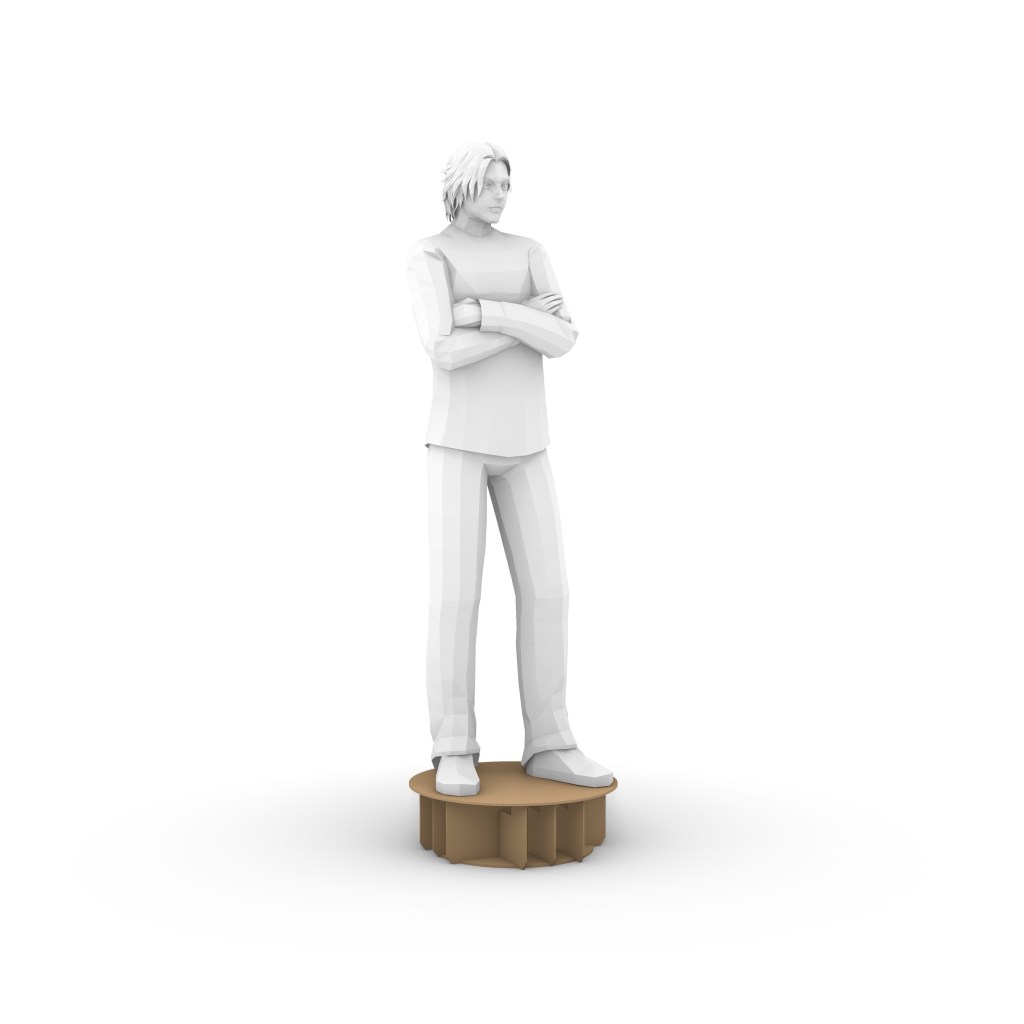
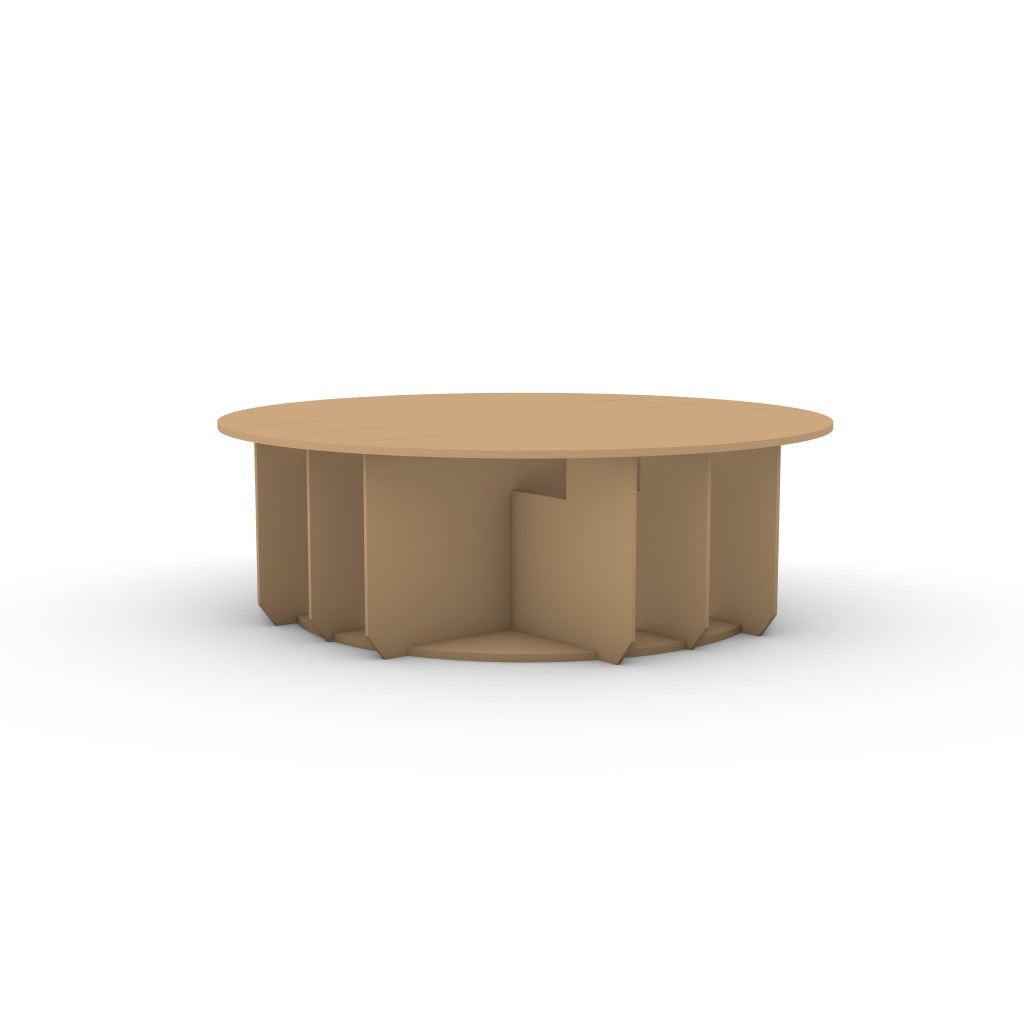
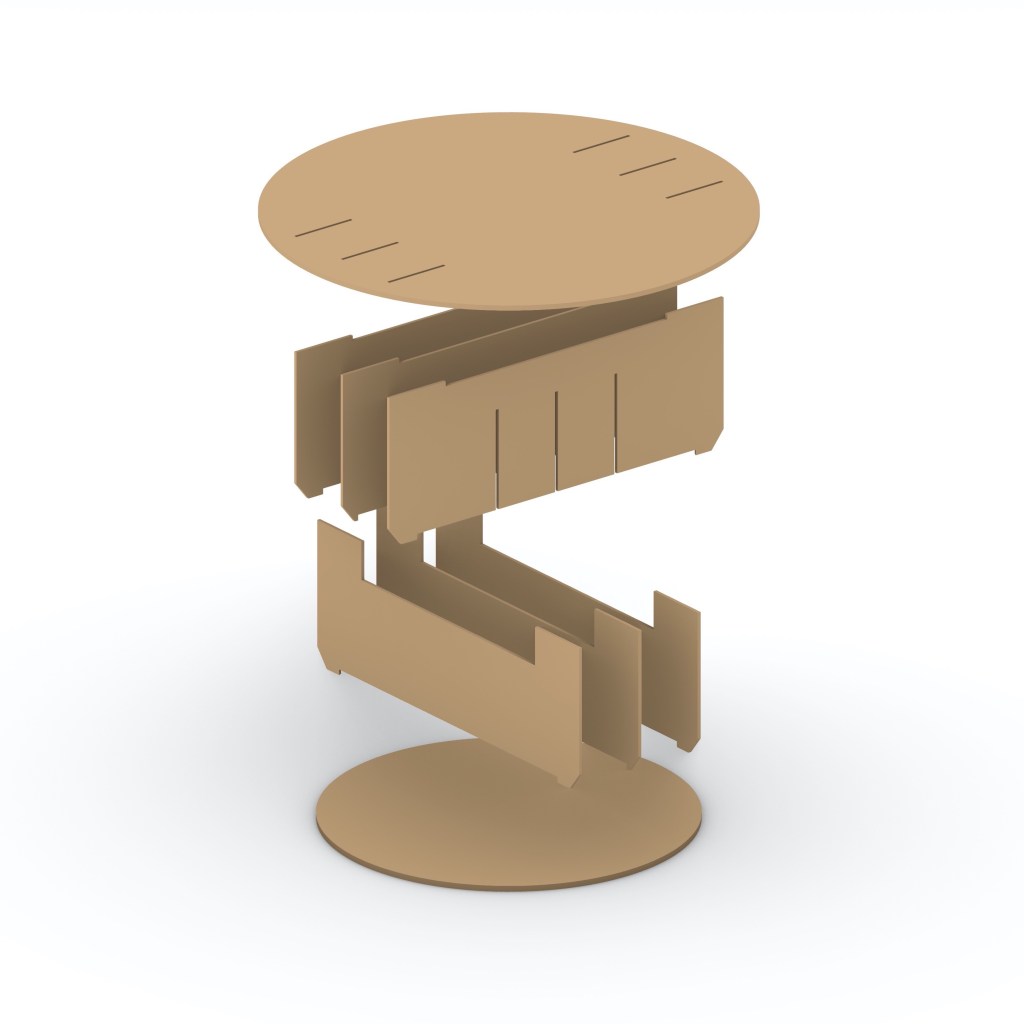
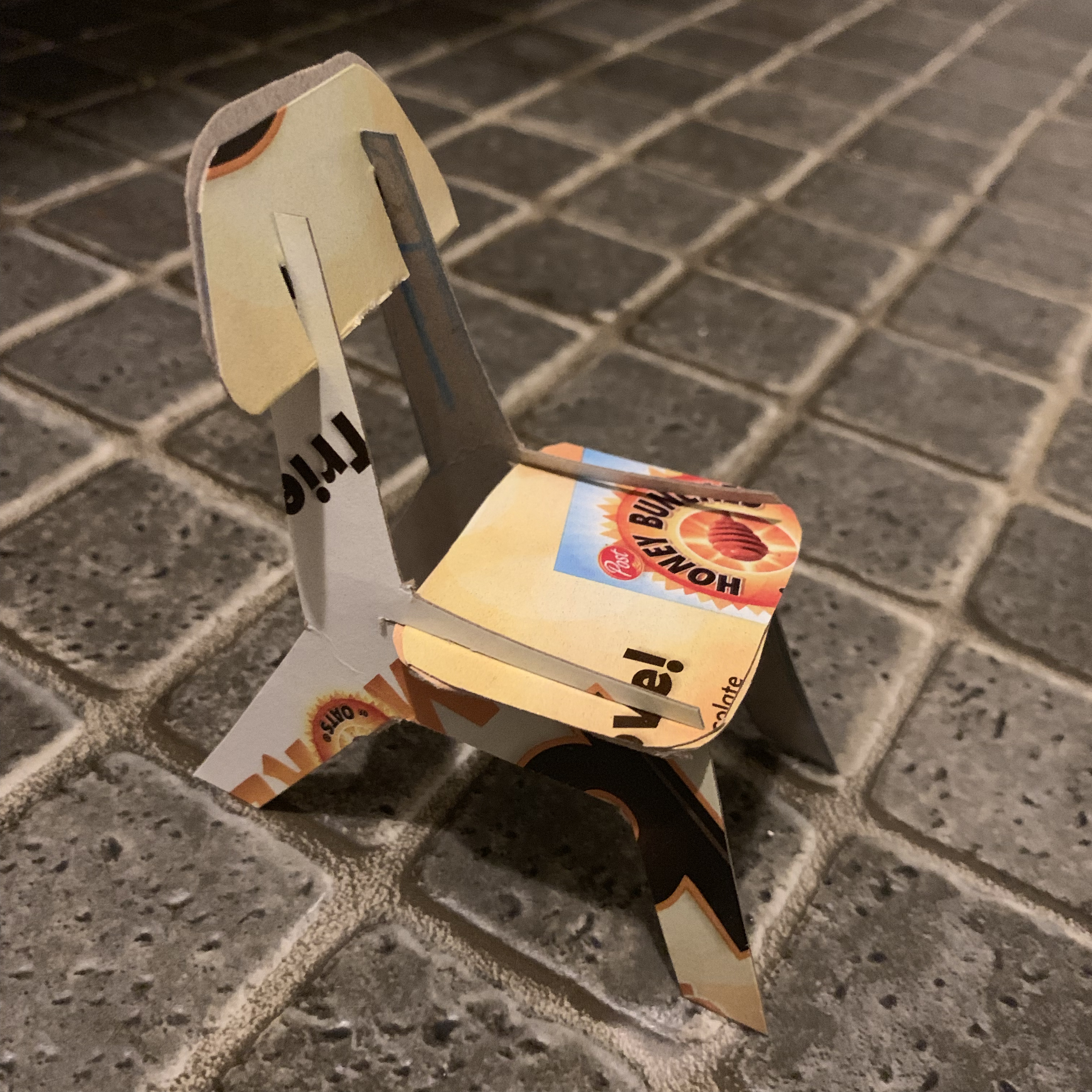
For my project, I decided on making my stool out of the collection of Honey Bunches of Oats boxes I have collected over the past 5 months. Like most college students, I have a graveyard. Unlike the others, however, my graveyard is not made out of empty vodka and tequila bottles, but the piles and piles of Honey Bunches that have made up a significant part of my diet.
The Honey Bunches boxes are made out of a flimsy chipboard material. It was actually surprisingly hard to work with. Any intricate cuts I tried to make ripped the material. Without tape or glue, it was quite a frustrating project.
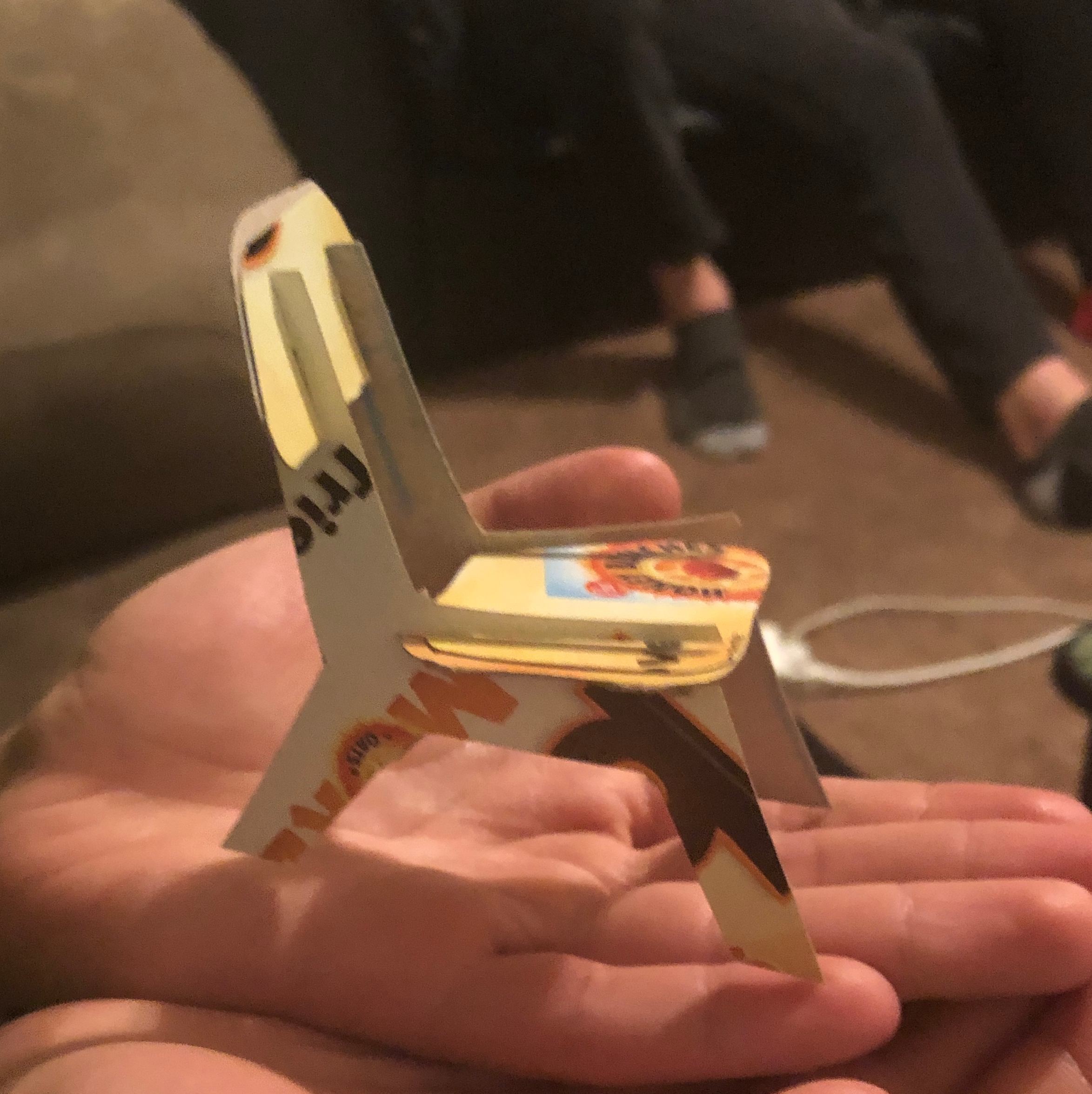
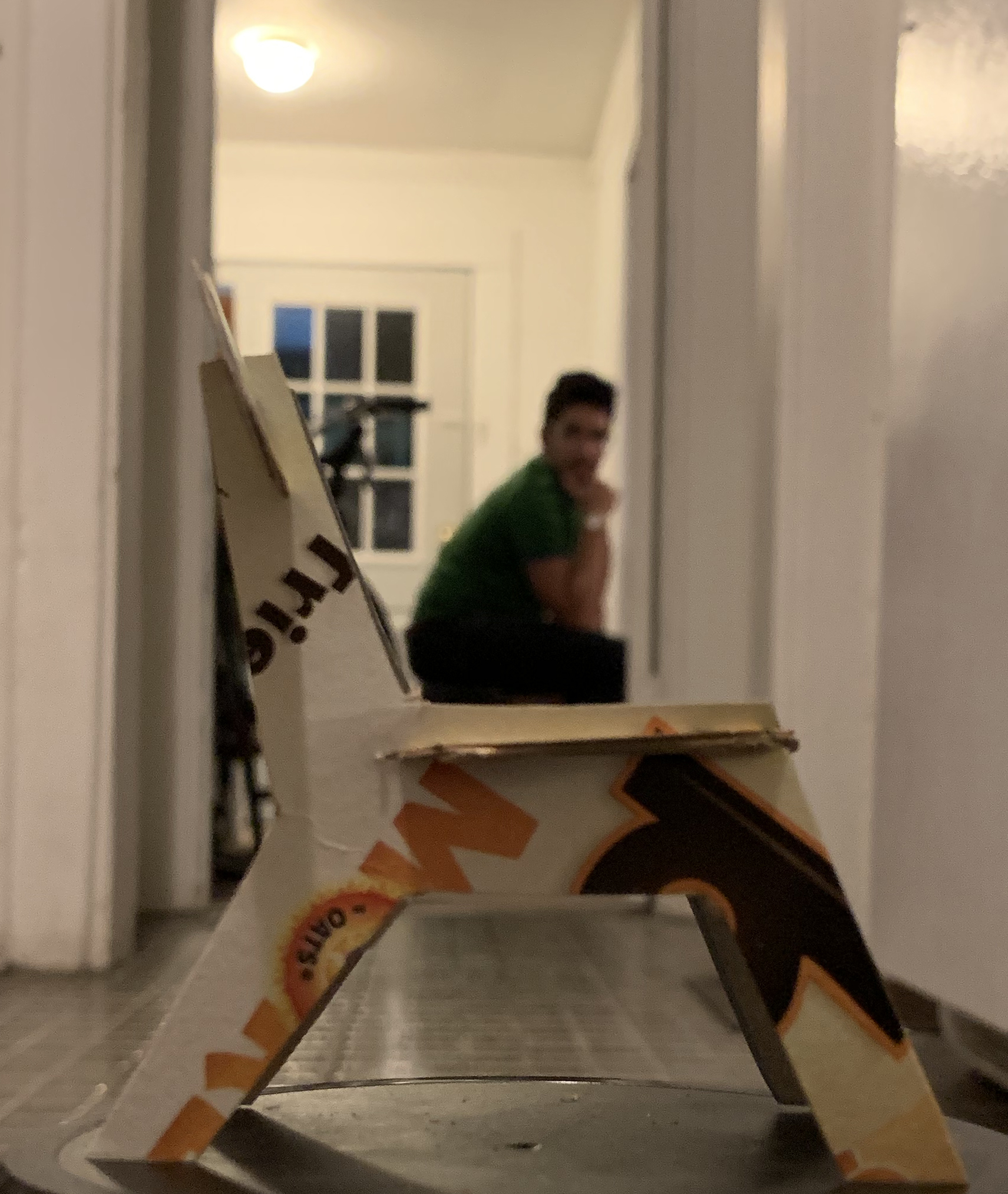
Here’s a beautiful perspective trick of how the scale model would look if it were large enough for a human to sit in it.
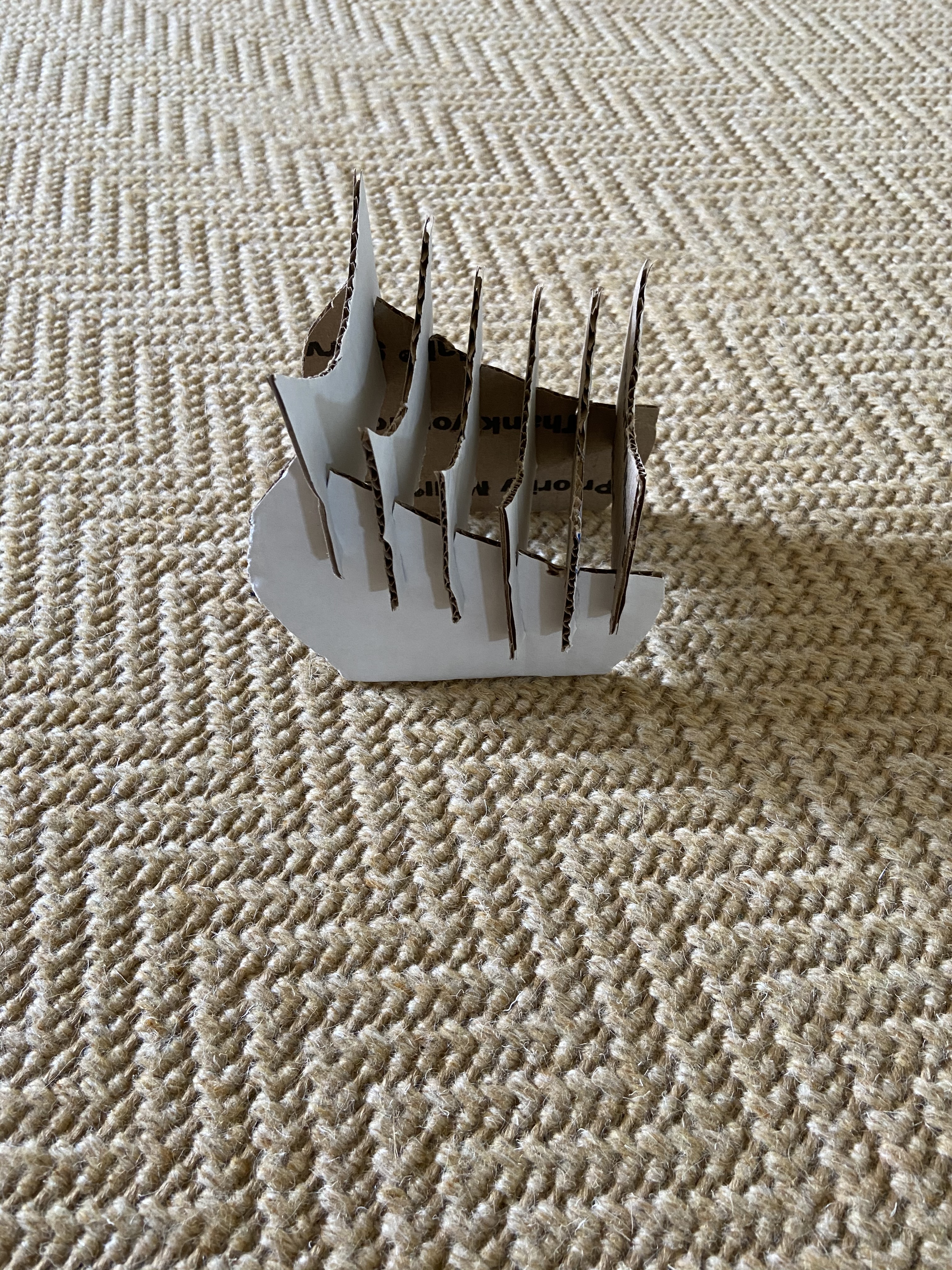
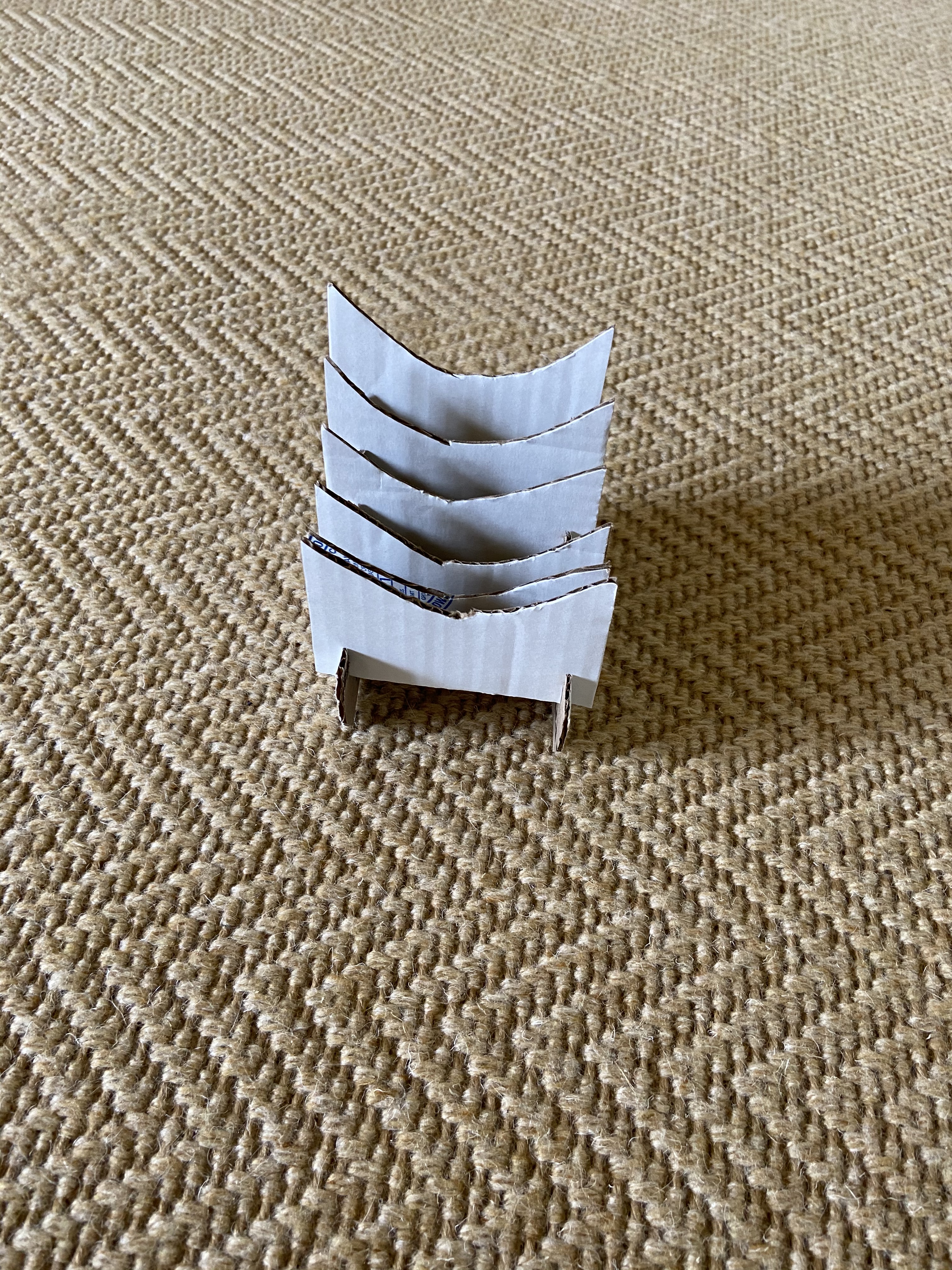
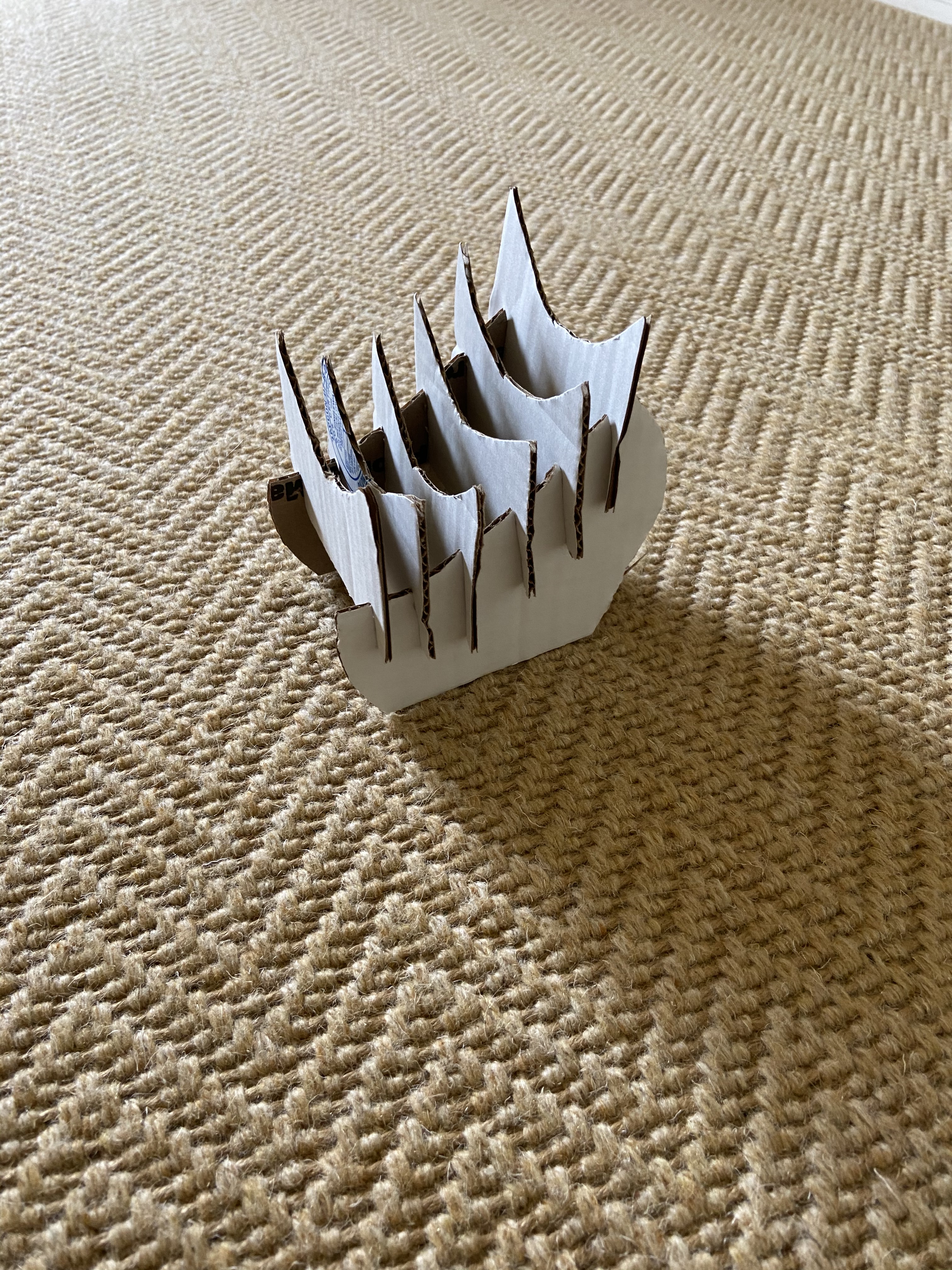
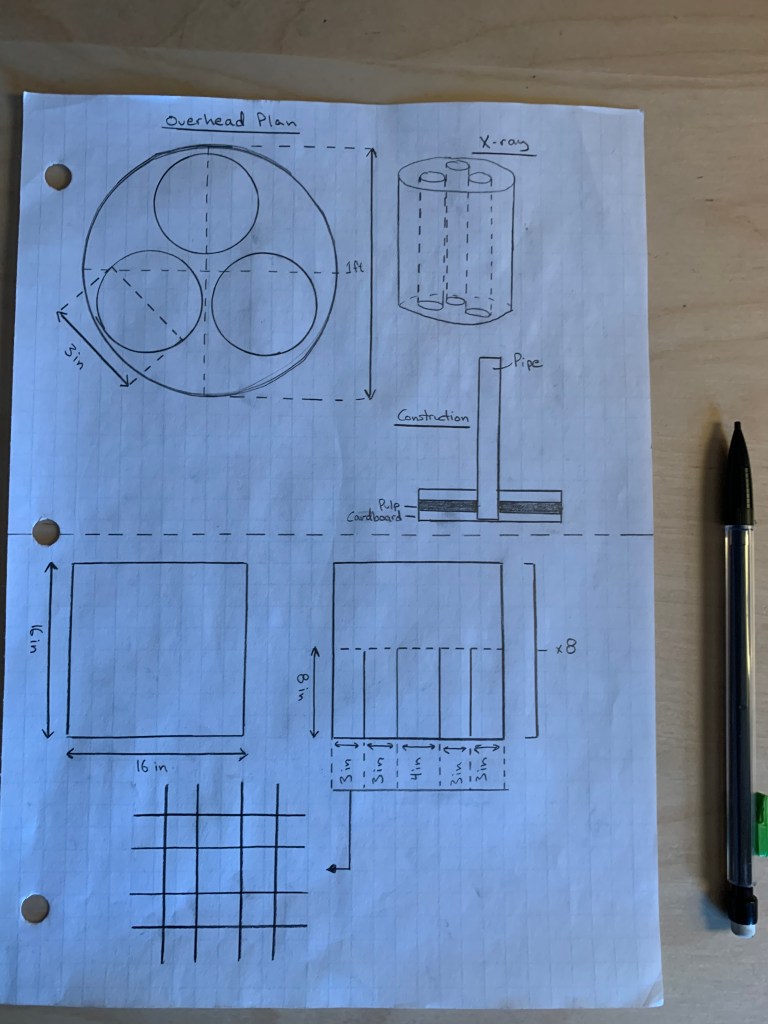
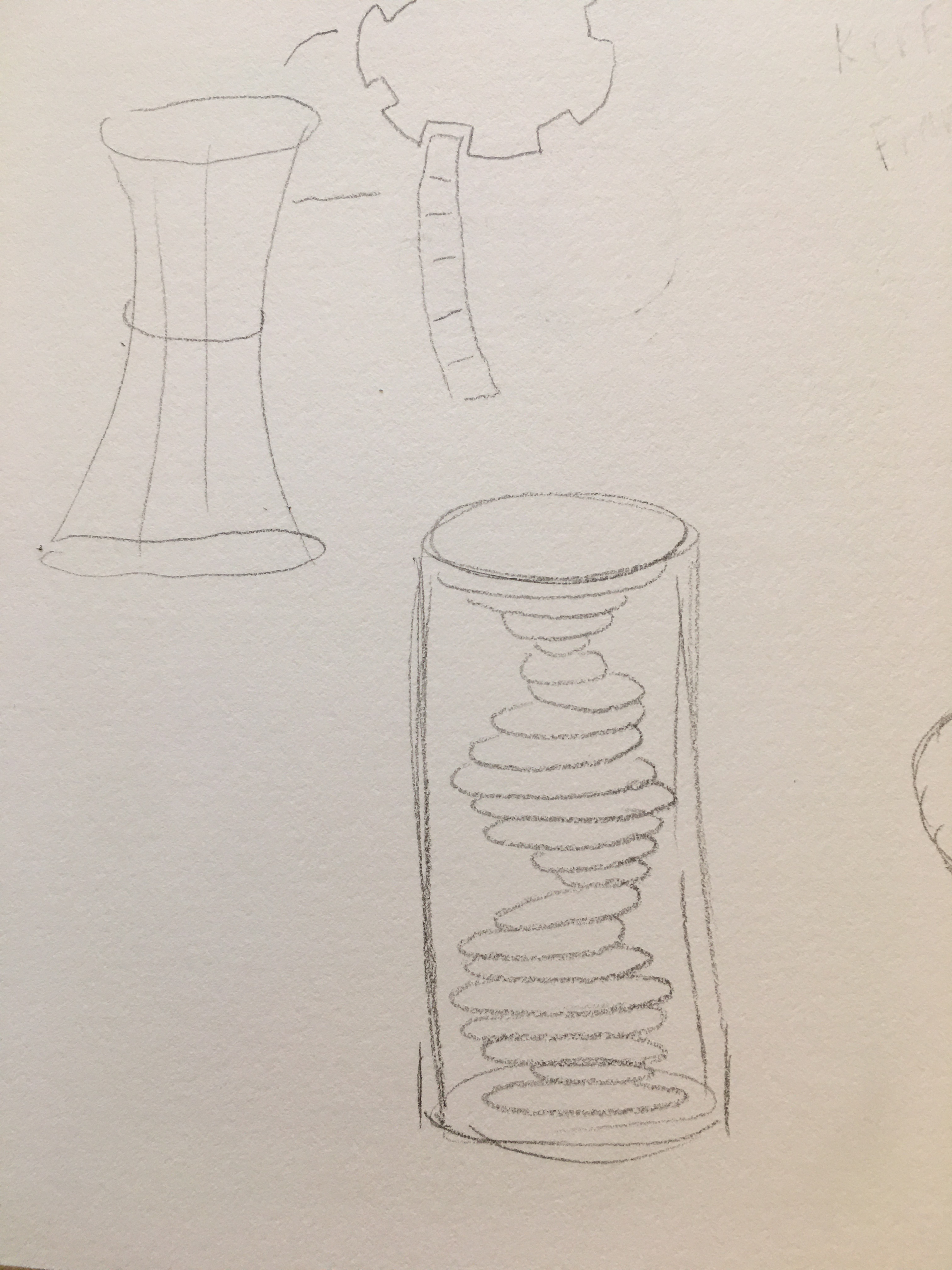
My main theme for my project was to create maximum structural efficiency. I accomplished this by interlacing identically cut cardboard squares in order to use the vertical strength of the cardboard as well as distribute the force of me sitting onto multiple joints. Originally, my idea was to think of the materiality of cardboard in a different way by using cardboard pulp as a sort of glue in between layers of cardboard, which would be supported internally by long tubes of empty wrapping paper rolls. However, I both didn’t have enough cardboard as well as not enough time to construct every layer while letting it dry. With the new structurally efficient design, I was able to use much less cardboard while retaining similar strength properties. While I was sacrificing some aesthetics of the stool, I still tried to provide a relatively minimalist look while incorporating column-like attributes.
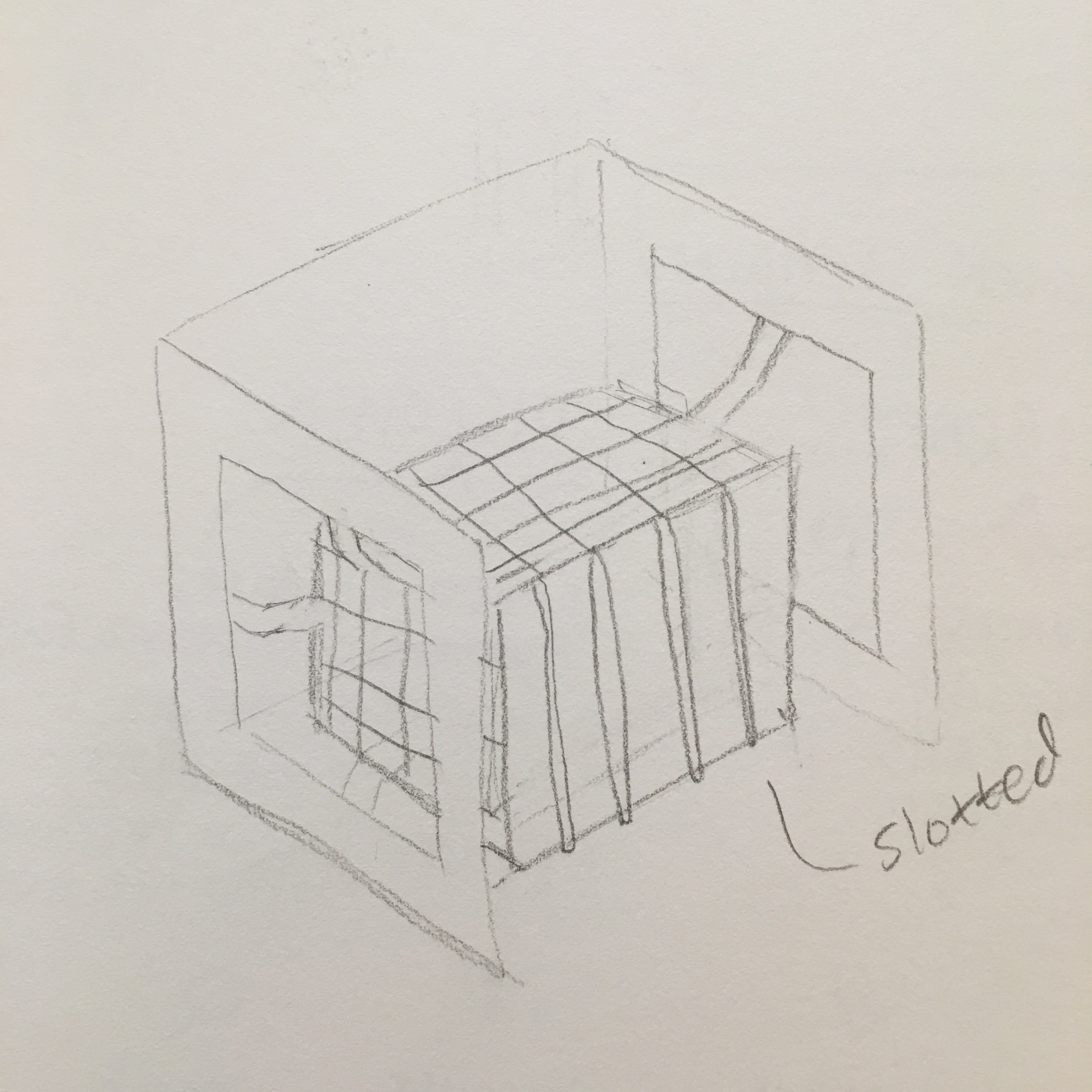
One of the main decisions I had to make was how far in to make the insertions for the other pieces to fit. The weight needed to be relatively evenly distributed and symmetrical to ensure the structure would not collapse. However, I also considered where specifically on the chair the weight would be distributed according to human anatomy, and concluded that there are two main points the butt (for lack of a better word) makes contact with the chair. Therefore, I did not make the incisions in a perfect grid form, and instead put slightly more cardboard where the weight is being concentrated. This ends up distributing the pressure in the joints slightly more evenly in order to allow the stool to last longer.


This is the San Diego Public Library. This is a public building that was built by the city that looks more like an expensive private development. Its creativity and uniqueness differentiates it from the ordinary public buildings that we see all over our city. By creating a unique, thought-provoking building people who normally wouldn’t step foot in a library are encouraged to enter. This is socially responsible because it is providing the public with a high-quality good that they can interact with and further their education inside. This socially responsible building encourages people of the community to read and learn when they otherwise would not.
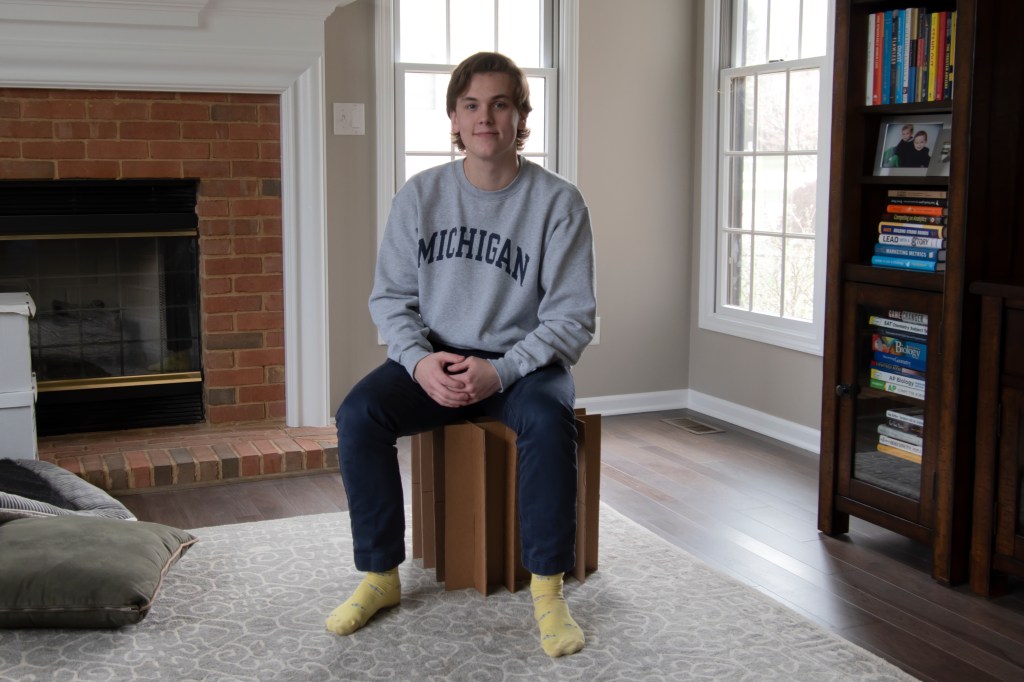
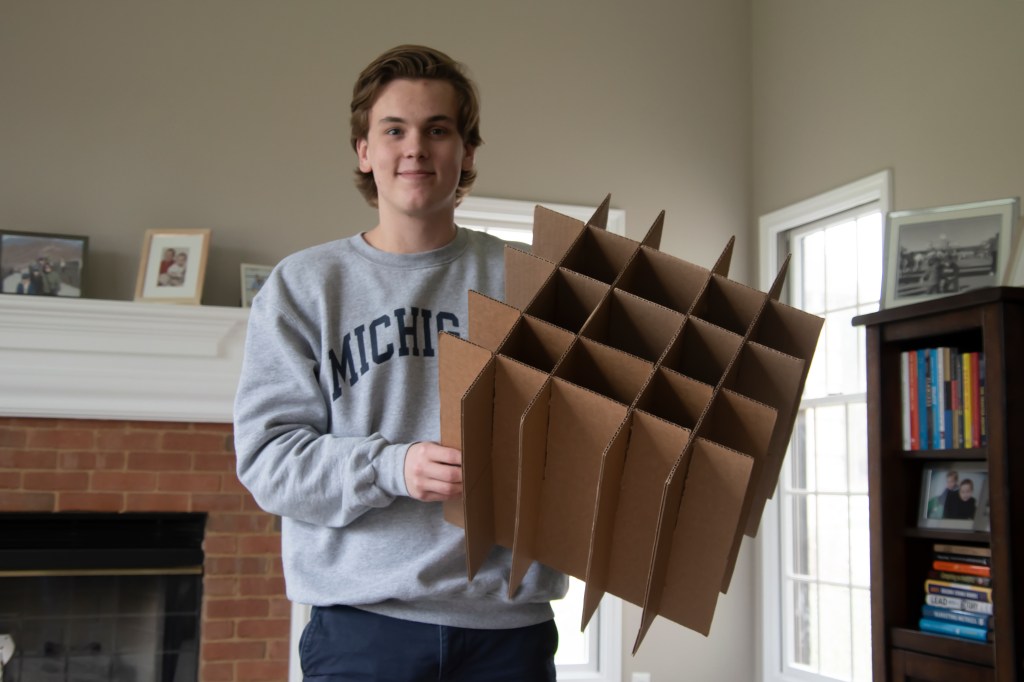
I have finished the construction of my stool and while I didn’t have enough cardboard for my original design, I was able to construct a stool with a grid-type architecture to ensure stability. My main goal with this stool was to provide maximum strength within a lightweight frame, making the grid design perfect for this project.
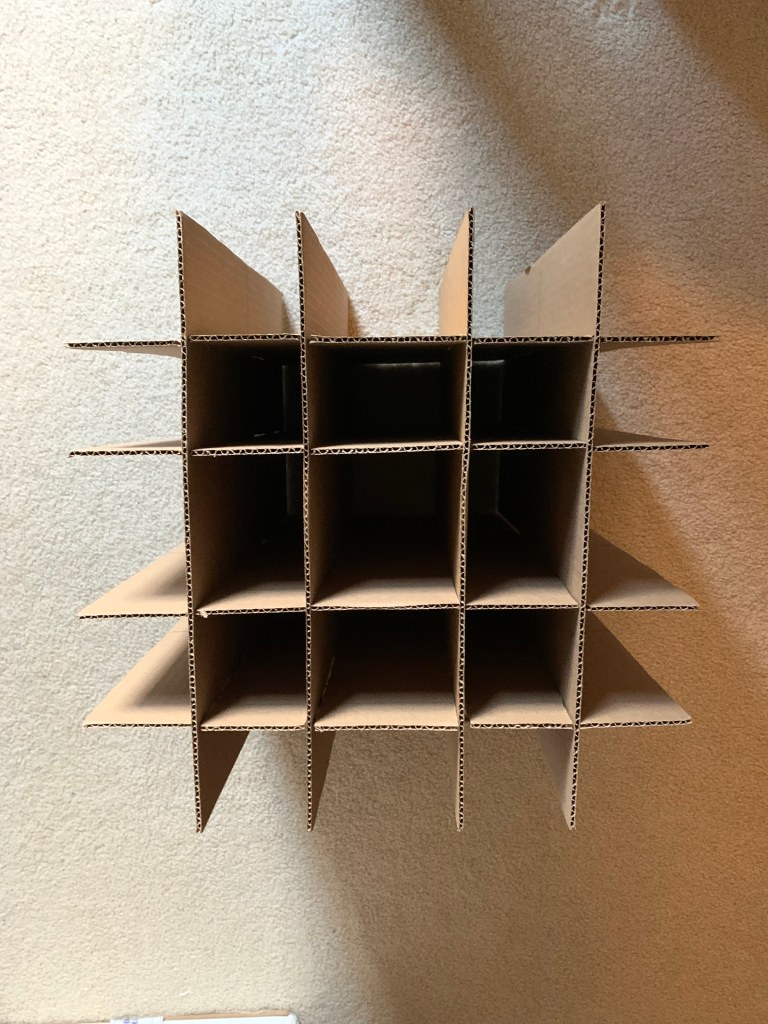
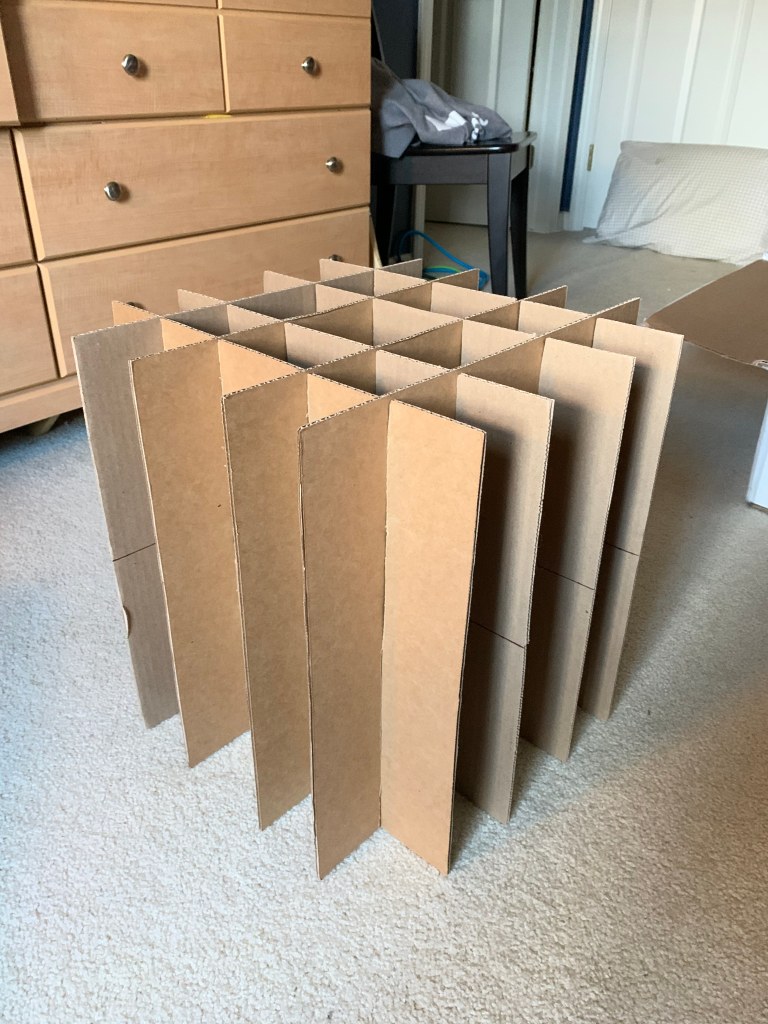
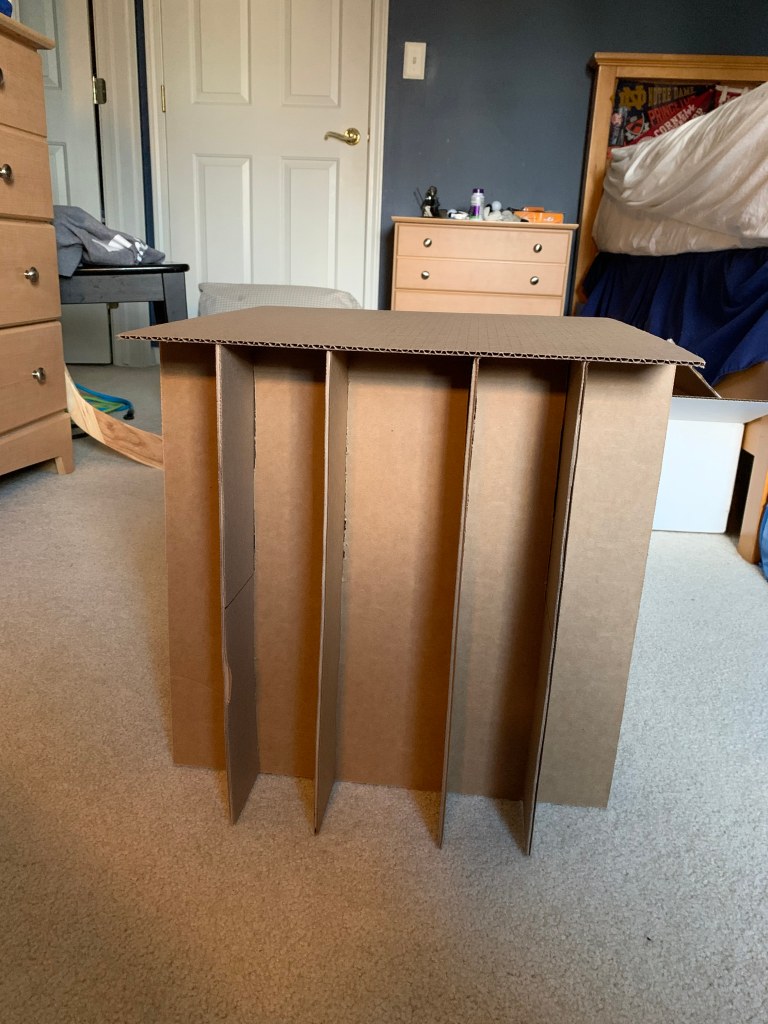
Inspiration from old cardboard project:


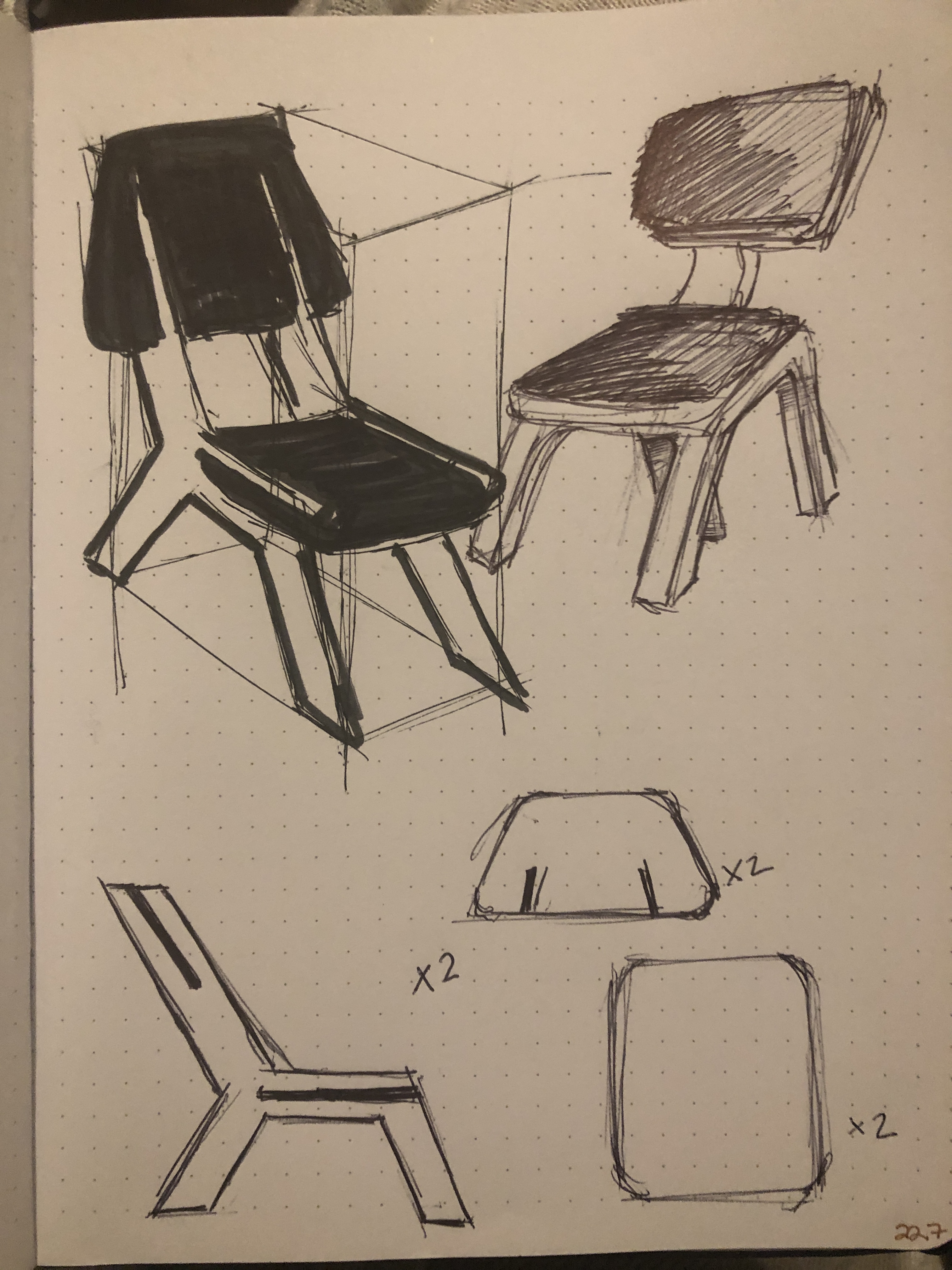
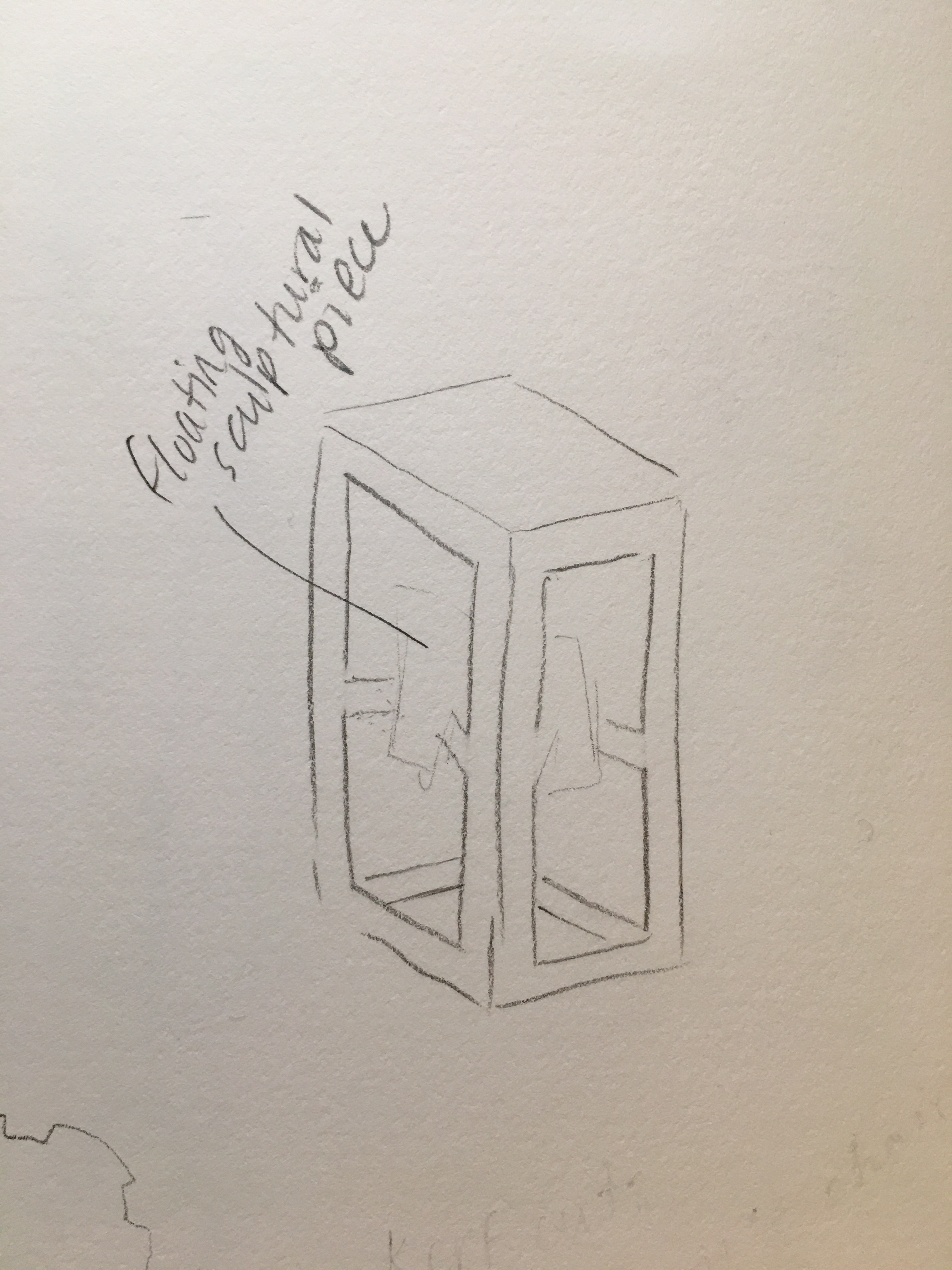
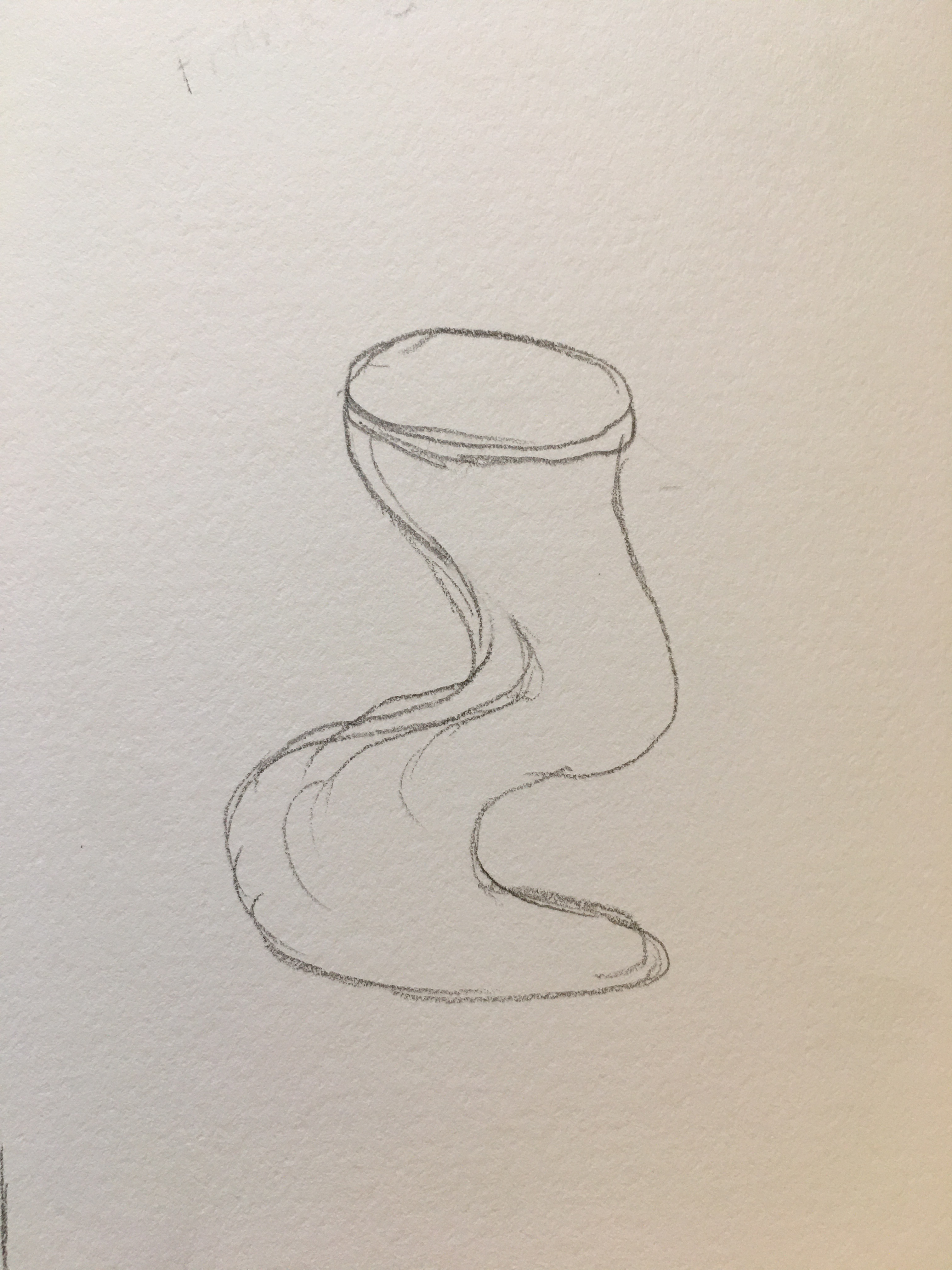
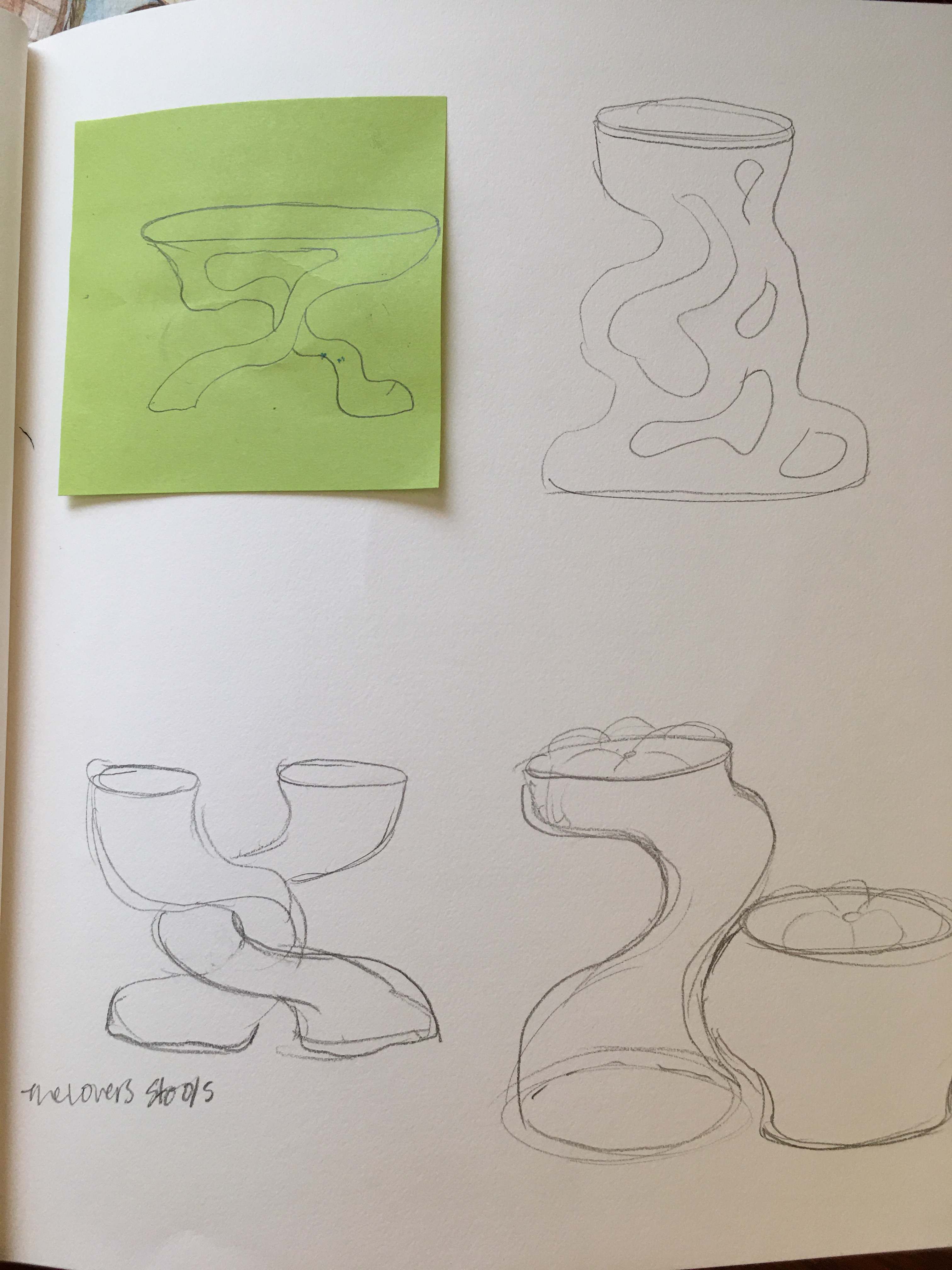
Sketches:
 Brian's 212 Understanding Architecture Section