
Galaxy SOHO by Zaha Hadid – Bejing, China
DOCUMENT
- Sociology – I think learning about the development and structure of a functioning human society could help to figure out the best position and layout for efficiency and engagement, especially for a place designed for high foot traffic.
- Urban Planning – I took an intro Urban Planning class even though I plan to be an architect and it was actually extremely beneficial. I just assumed most architects had some preconceived sense of how the build environment is designed and functioned but by understanding why and how certain decisions were made can help to make a building that would fit the environment better and is a conscious of its place in it.
- Digital Drawing – For any structure really, but this one in particular, given its extreme complexity, needs a rigid and firm model to reference. Whether that is for design, engineering, or construction, something that is detailed enough for everyone on the project to reference is key. This class does a great job at introducing CAD modeling for these purposes yet could certainly expand more on BIM compliant software.
- Surface Structures – While this is a functioning building with many functional components, the overall shape is certainly out of the ordinary. It is very fluid and continuous. This class can provide a great asset in understanding the behavior of continuous surfaces through physical and digital experiments.
- Beautiful Objects – This Stamps class provides a new level of thinking of traditional overlooked objects. While very reminiscent of product design, we challenge and question what makes something truly beautiful. This building can certainly be said to be “beautiful” but understanding why or coming up with it in the first place is something this class can help with. By removing all the traditional aspects of a building and completely rethinking them, new ideas of how to perform certain functions can emerge.
- Product Design – Understanding how to design products for function can certainly be helpful for building spaces who is also primarily design for function. By evaluating what function means and how seemingly similar products can carry vastly different functions is certainly fuel for new architectural thinking. This building can be said to have many functions but choosing which ones to prioritize and focus on is something this class can help to narrow down.
- Generative Design Computing – This building is so different and striking that I question how the design was imagined. I am familiar with the work of Zaha Hadid and I know that they spend a lot of their resources on design research – especially with computer generated aid. They explore new ways of constructing form and creating space in between using certain algorithms and computer processes. This class can help to create these new designs and explore the realm of what’s possible for design.
- Physics for Architects – This course can be self-explanatory in many ways as this certainly doesn’t just apply for this project. Architects need to have at least a basic understanding of how mechanical physics works in order for their building to even stand up and support its own weight. Other factors need to be considered such as how light and sound can interact with the environment to create the best experiences for the people in and outside the building.
INVENT
Experiments in Unrestricted Architecture (Architecture in Outer Space)
This course is designed around the idea of creating architecture or ideas of architecture from no predetermined or comparable reference. People think of space as infinite, but architects see space as a finite unit of design. That is because all designed spaces are ultimately bound by rigid factors such as the physical location, including its terrain, climate, and even cultural stature. This course eliminates the boundaries found here on earth and even suspends known constants such as gravity and other physical attributes. By freeing the architect from all preset boundaries, it is up to them to define space within their own bounds and reason. This can easily be stated as architecture in outer space.
Why? Why would students need to know how to make spaces that can’t physically occupy space on the natural world? For as much as we believe that the world has a variety of environments that we can build in, everything we build, more or less, is constructed under the same design elements. By eliminating the control and challenging the status quo, we open our minds to new possibilities of how people move within and understand spaces.
The course schedule would consist of three projects of creating models and representations of new spaces, each distancing themselves further from the present reality and its norms, to a point where it can almost be indistinguishable from anything possible on Earth yet full of answers to questions previous projects may have positioned.
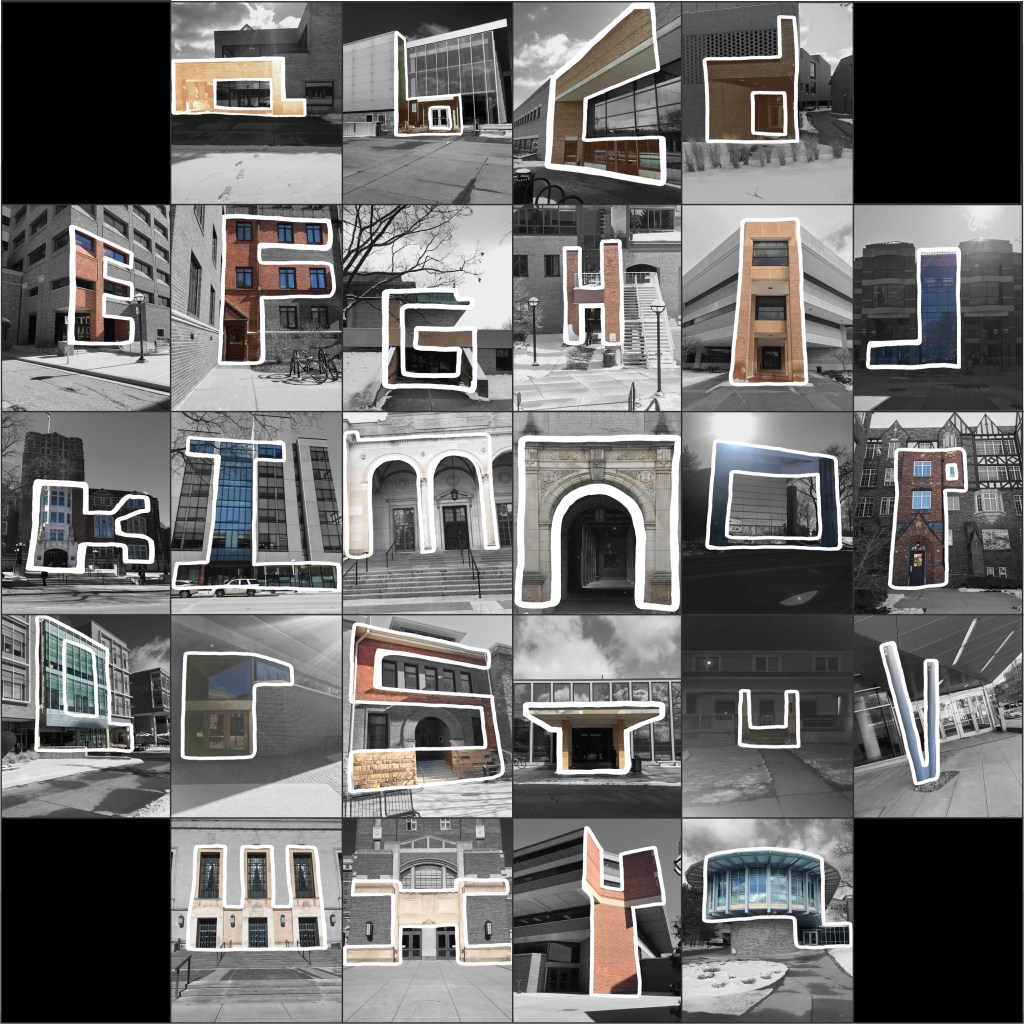
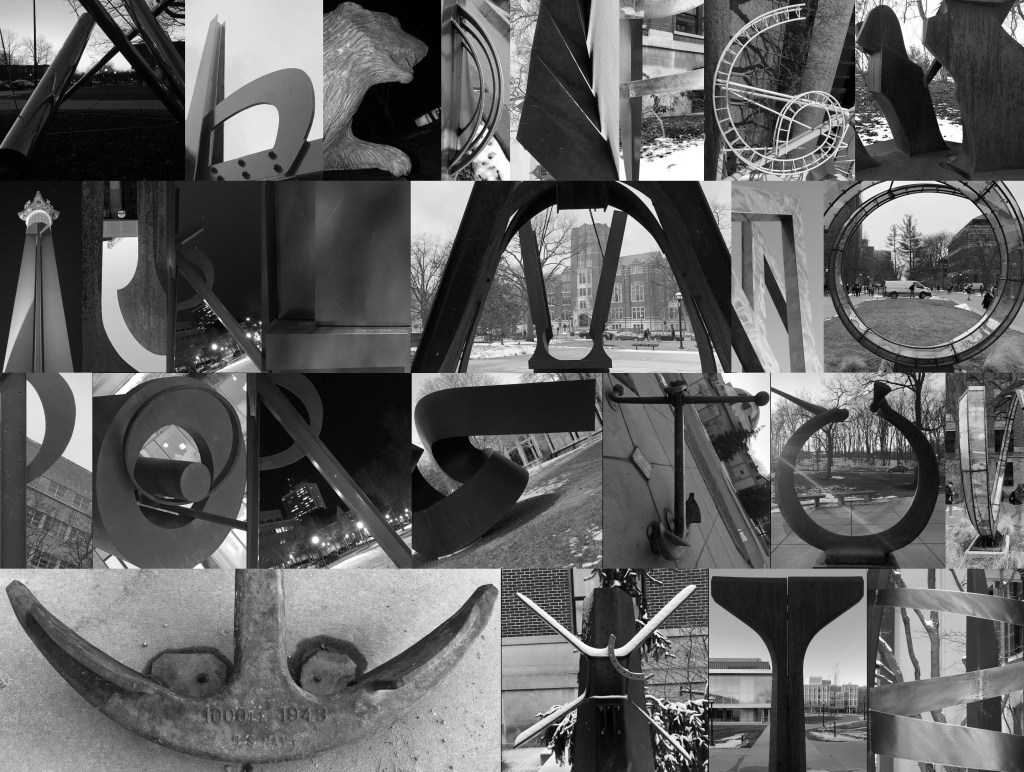
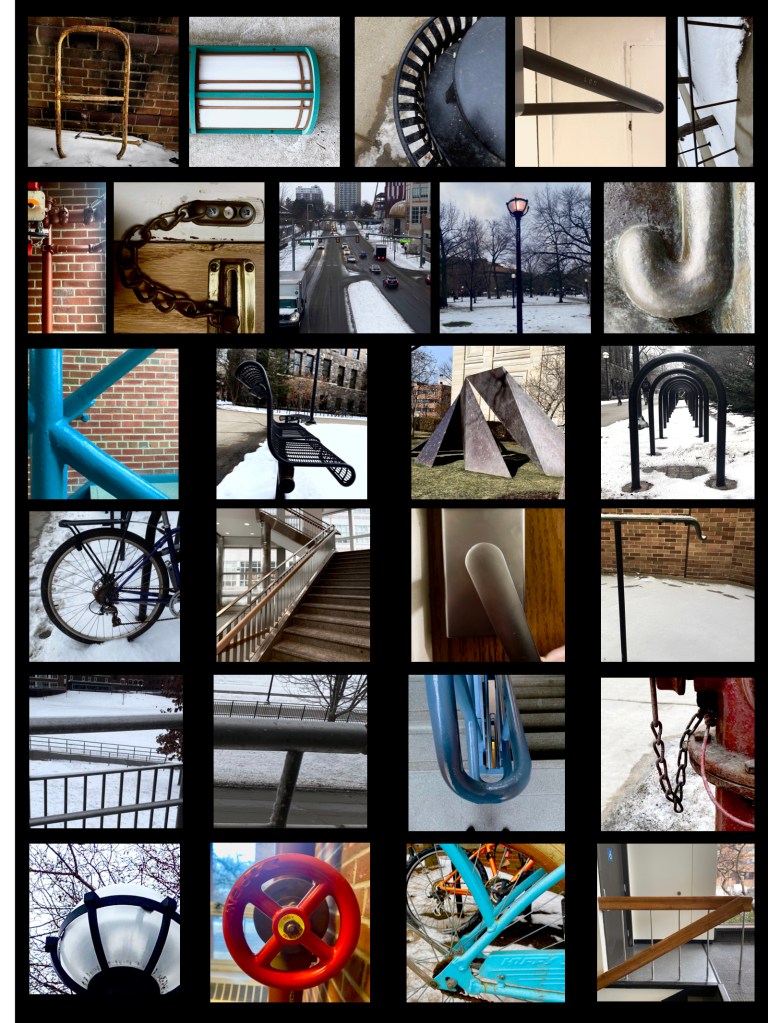
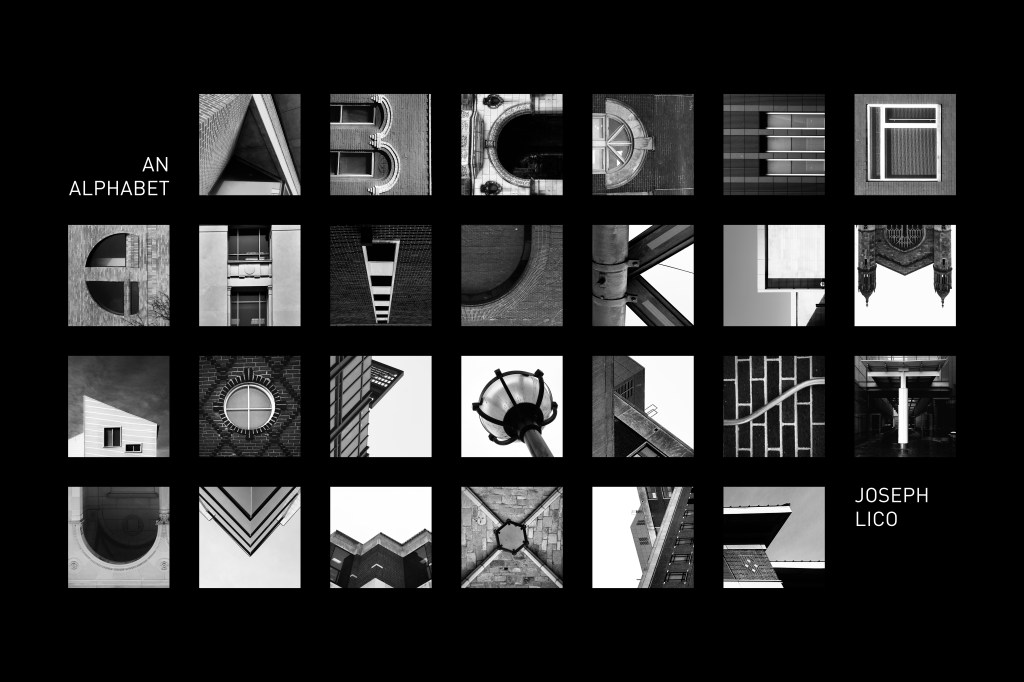
 My theme was (1) white and/or (2) walls and ceilings. I wanted the body of all the letters to be white and for them to be related to the walls and ceilings of a built environment, either through structure or adherence. I also wanted to capture simplicity and subtlety in the images.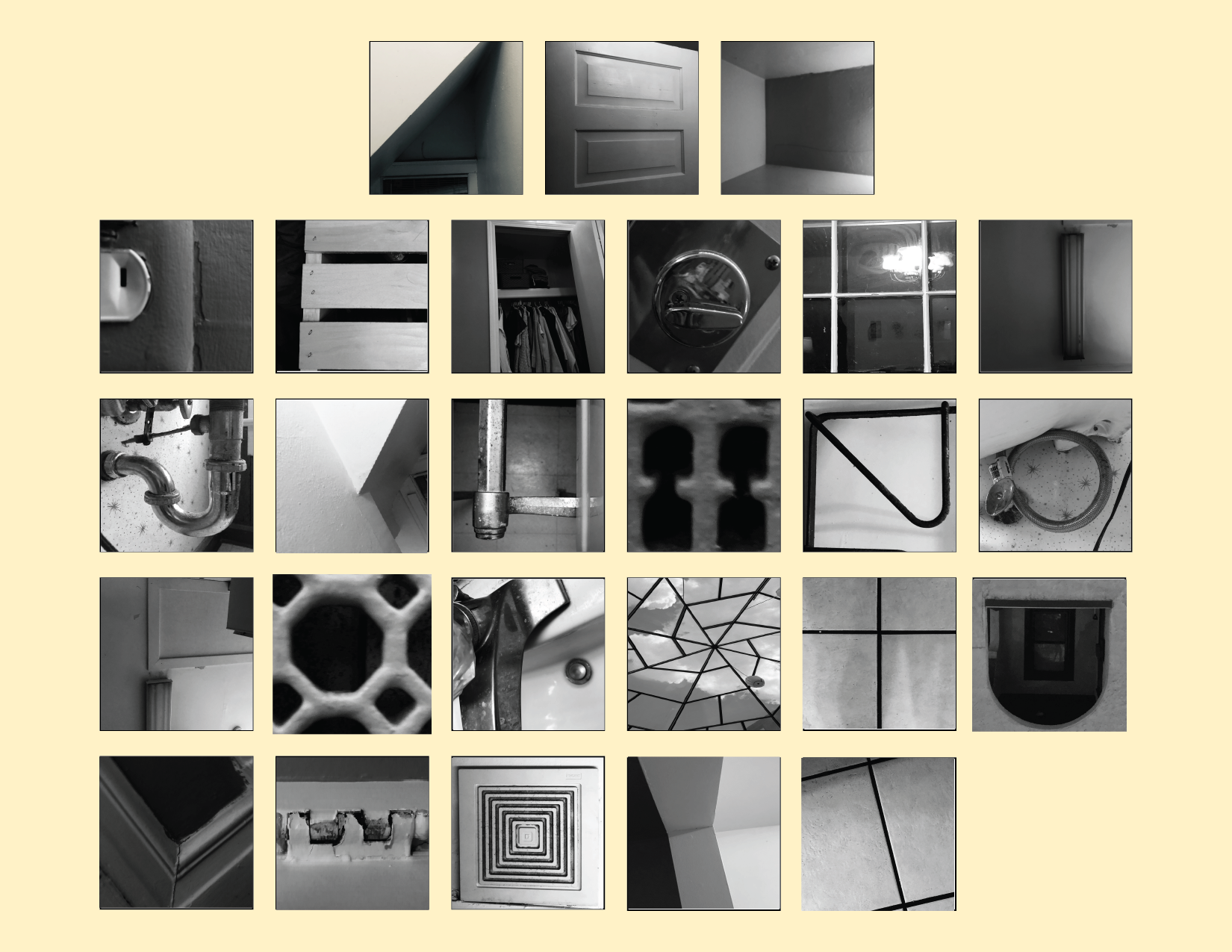
 Brian's 212 Understanding Architecture Section